
Entering the rehearsal studio at The Bushwick Starr in late January, I was greeted by a large trashcan with a cyclops eye and a smile, followed by several rat puppet understudies (“the real rats,” I was told, “are in the puppet hospital”). A wall of inspiration photos behind the desk spanned plucky, wide-eyed outsiders from Divine to SpongeBob to Little Shop’s Audrey and The Sopranos’ Adriana. Gooey, the almost-mermaid ingenue of Gooey’s Toxic Aquatic Adventure (playing at The Bushwick Starr February 4 – 21), fit right in. This was Gooey’s world, and I was lucky enough to visit.
Gooey is the creation of La Daniella, a performer and playwright whose family has been in Bushwick for decades. According to lore, Gooey was born of the guts of the Gowanus Canal, the abandoned daughter of a mobster and a community-activist-cum-beauty-queen. In reality, Gooey began as La Daniella’s escape from a frustrating career moment, a way to find joy in performance. In Gooey’s Toxic Aquatic Adventure, our eponymous hero leaves home to chase her dreams—and finds a new family along the way.
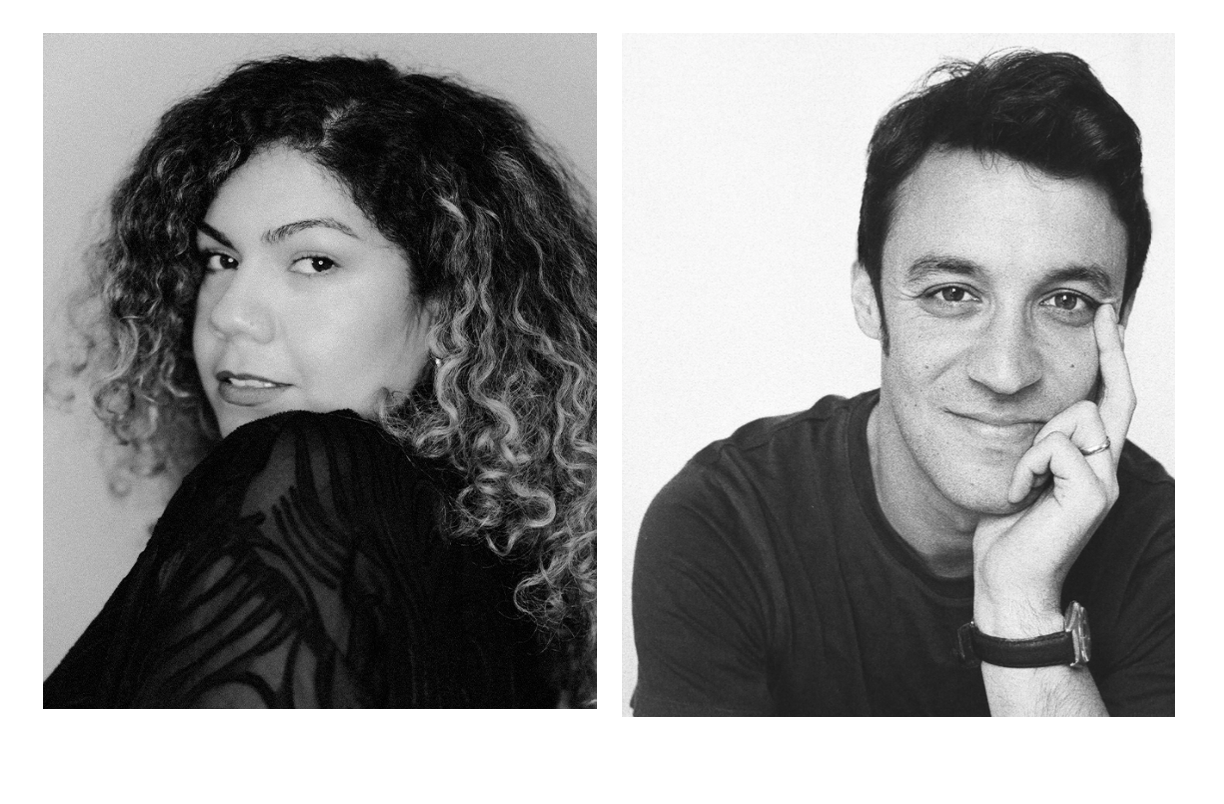
I spoke with La Daniella and Sammy Zeisel, who directs the musical, shortly after attending rehearsal. We discussed Sweet Charity, stench, and finding your people in an ever-changing city.
This interview has been edited for length and clarity.
Annie Rasiel: Who is Gooey?
La Daniella: Gooey is an orphaned sort-of-mermaid from Newtown Creek. And by sort of, I mean that she’s not anatomically a mermaid, a half-fish, but rather that her legs have bound together in trash from years of pollution in the Gowanus Canal, the East River, and Newtown Creek [a tributary of the East River between Brooklyn and Queens]. As she’s grown, the trash has grown with her.
Sammy Zeisel: She’s made her home in Newtown Creek and become friends with the objects (mostly trash and dead animals) that exist around her.
AR: Where did Gooey come from?
D: Gooey has a lot of me. I started creating Gooey for myself in the fall of 2022, when I was really frustrated with pursuing a career in writing and my identity as a playwright. Gooey became a character through which I could experience hope again. She’s my inner child who I let run rampant.
SZ: The play and its world are an outgrowth of that character. Finding the story meant constantly checking in with the heart of the character. As we’ve been making choices in developing this new musical, we can tell whether they’re working by checking the “Gooey Meter.” We ask, “Does that choice feel Gooey?”
AR: What does it mean for something to feel Gooey?
D: It means heart-forward and curiosity-forward, with an energy of playfulness and sustainability. It means recycling, putting new life into something that was previously regarded as trash or ugly or unlikable.
SZ: Being Gooey often means embracing the beauty in something that could be considered grotesque. In terms of making a theatrical choice, it means asking yourself, “How would I do this if I were six years old and playing pretend with friends?” While directing, I would sometimes catch myself trying to be too clever about a choice, when what I actually needed was to operate in a deeper, more tender part of myself.
AR: What was it like to assemble a cast and crew as you built out this Gooey world of tenderness and art and play?
D: This show calls for a virtuosic cast of performers, because so much is asked of them. They have to puppeteer, they have to sing and dance, and they have to be really good character actors. First we looked at folks we had worked with previously. One of the first people we cast was Amanda Centeno, who’s playing Scabby. She’s been with the project since June.
SZ: We needed people with a broad range of skills, but they also had to have the right Gooey energy, people who would jump right in and start playing with us. We were lucky to have a long runway of development. The show has been programmed for over a year, so we had time to build the team, and we had workshops at the Peabody Essex Museum and at Lincoln Center. In both cases, we got to invite people on board, see how they fit, and allow them, in certain cases, to influence the project and be a part of its growth.
AR: Sammy, how did you get involved with the project?
SZ: Machel Ross, who is the Associate Artistic Director of The Bushwick Starr, and I are really old friends. We did middle school drama together, and we had always talked about someday making theater in the same spaces. I was just leaving graduate school, and Dani was looking for a director at that time. Machel put me up as one of the options. Dani and I didn’t know each other at all, and I think we really connected over ways of thinking and talking about theater. It felt very natural to me.
D: I went to undergrad at NYU with Machel, so when Sammy and I met and started talking about theater, it felt like I was talking to someone I went to college with. We had a similar collaborative vocabulary. I also asked him what his two dream projects would be if he could direct anything with an unlimited budget, and he said, Uncle Vanya and the SpongeBob SquarePants musical. To quote Sweet Charity, “You hit me right, right where I live.” I was like, this is a perfect, perfect mashup.
SZ: The initial core artistic team—Daniella, our incredible lyricist and composer Ben Langhorst, and I—pulled from our communities. It’s been so cool. There are a lot of NYU people involved who have known each other for a long time. I’m not one of them, but I have my own deep roots in my art family from Northwestern, so I recognize the feeling. That kind of communal art-making feeling has suffused the project; it’s a blend of art families.
AR: When I visited rehearsal I noticed a very specific loving energy in the room. At the risk of sounding cliché, you really did seem like a big family.
SZ: That’s been true. Hearing you talk about this, Dani, I’m reminded of an early conversation, maybe even in our first meeting, about whether this would be a solo show.
D: It was supposed to be a solo show!
SZ: I remember us thinking, that sounds really lonely.
D: It would be really sad if this were a solo show.
SZ: I think the seed of that feeling is still in there. At the beginning, Gooey’s life is a solo show. We watch her playing with her puppets, and then that world expands. The collaborators come in over time. She goes on this journey and meets her found family.
AR: How much has the script changed throughout development? How much have you discovered in rehearsal?
D: Almost everything. When we started working on it, I had a sixty-page script, mostly sketches of these characters and places that I wanted to write about. Gooey was always there and Scabby, her rat friend that she makes along the way. Their friendship was always at the heart of the story. Fred Boss, this kind of Tony Soprano/Jeff Bezos corporate mobster, was always part of the story too. It changed a lot when we brought Ben Langhorst on. Ben and I have this playful, collaborative spirit, because we made so many silly shows together in college. His expansive musical theater knowledge was perfect for the show, because it’s so referential. The workshops really helped us finish writing too. We didn’t have a full draft until the end of September.
SZ: The character and the world were always very set. The question was narrative. What is the narrative that we’re telling within this world and with this character? The key moment was when we realized it was a musical. Then we needed to bring Ben on board. But the whispers of it being a musical were in that initial draft. I remember reading the script and being like, I think this is a song. I think you’re writing a song here.
D: One of the initial inspirations for the play was Sweet Charity. When I started writing, I had gotten really into Fosse/Verdon on FX. I watched it three times in a row, and I was nerding out on Gwen Verdon and Bob Fosse. I learned that my cousin was a Broadway dancer, and he was in the 1986 revival of Sweet Charity with Debbie Allen. And I was like, Oh, my God, that’s so cool.
But unfortunately I never met him, because he passed away when I was very young from complications of AIDS. I was learning so much about him, and I wanted to do some sort of adaptation of Sweet Charity to feel closer to him. I just kept thinking, How cool would it have been to be able to collaborate with my cousin? What would he think of me and my work? So Sweet Charity was always at the heart of the story. When we honored that impulse and let that music grow, it was like… Yes. This is exactly what the show needs. The music helps tell the story in its full earnestness and maximalism.
AR: I’m hearing so much about family in that story, about an artistic home and artistic lineage. I read that your family has been in Bushwick for decades. Can you talk about your family’s influence on the show?
D: My family’s voices are all throughout the play. Scabby is a little bit of my mom. He’s a little bit of my uncle, this hard exterior with an ooey-gooey center. My family has lived in Bushwick since 1968 and in North Brooklyn since 1948. A big theme of the play is trying to find belonging in a New York that is unavailable to you—that you’re being priced out of or that has become inaccessible to you, even though you’re a part of it. That’s how I feel in New York City. I started to notice the gentrification of my own neighborhood when I was still in high school. You need a credit card to access everything now, and there are so many people who don’t have bank accounts. That harsh, cold rejection of humanity is a big influence on the show.
There was this woman who went viral online recently because she wrote her thesis on the politics of smell, how smelling good—or looking like you smell good—is a class signifier. Smell is such an important part of Gooey’s world.
Another big influence on the show is this documentary from 1999 called Lavender Lake. It’s a really kooky film about all these rumors and tales of the Gowanus Canal and all the characters that populate the neighborhood—it feels like a mockumentary, because every person in it is such a character. I used to live in Sunset Park near the Gowanus Canal, and I was obsessed with all its lore.
AR: We’re talking about gentrification and isolation and stink. That could be a very somber drama. Why a musical? Why this playful style?
D: To me, it’s only natural to infuse humor into storytelling, no matter how grim the circumstances. That’s just life to me. Humans have survived atrocities through our ability to find meaning and lightness. Gooey says this at some point in the play—it’s her methodology. She says, “My life ain’t been no bed of roses neither, which is why I make sure to stop and smell them when I can.” I also think audiences are more likely to invest in characters and stories when there are moments of laughter and lightness; a bit of honey makes the medicine go down.
SZ: The play contends with some of the darkest things that are happening in society right now, but it does so in the spirit of Gooey, which is to say moving with a spirit of joy and finding the potential in whatever life is present, even if we’re in a near-apocalyptic landscape. That’s part of the political philosophy of the show. Dani uses the term tactical optimism.
D: We can’t afford to be hopeless.
SZ: Yeah. The show is an expression of tactical optimism. Dani created this character as a means of survival, and the joy she finds in writing and performing is part of surviving.
AR: I want to talk a little bit more about the grossness: the sludge, the stink, the severed hand in the Canal. What is the role of grossness in this play?
D: The source material is very gross. The Gowanus Canal and Newtown Creek are some of the most polluted waterways in the United States. They’re both Superfund sites. There have been oil spills. These are stagnant bodies of water where sewage is collected, and yet, there are still creatures in them that survive. Some, like extremophiles, thrive, but there are also cranes and seagulls who have to live their lives in this muck. Their reality is gross! There have been cases of radioactive waste seeping underground and affecting people’s health. I saw a short documentary about the rates of cancer in Greenpoint as a result of Newtown Creek. A lot of the grossness is just rooted in the reality of how people live. It’s disgusting. It’s grotesque. We’re afraid to look at the reality, but we have to, because our neighbors have to live that way, and they shouldn’t.
SZ: The Gooey way is not to reject those aspects of reality that we tend to consider disgusting, because there’s even life in that, even in pollution. It’s an ecological play, but it’s not about sanitization. It’s about an embrace of the mess that we tend to segment off, like smell. What does it mean to reject something because of its perceived grotesqueness? The play doesn’t see the world that way. We try to embrace that collision of the gross and the sweet.
AR: I’m reminded of little kids playing with mud, or the way my dog finds joy rolling in trash. It’s not gross to them. Smell is just information.
SZ: It’s all conditioning. This play follows Gooey. It’s not that she likes gross things; it’s that she doesn’t make a distinction between what we consider gross and what we don’t, so the play doesn’t make that distinction either. In rehearsal we’re always asking ourselves, Are we gross enough?
D: I thought of something to add to make it grosser.
SZ: Good, good.
AR: I really enjoyed hearing about the influence of Sweet Charity on the show. You have so many exciting reference points. Can you talk about one or two more?
D: Maybe Pee-wee’s Playhouse and The Sopranos. The Muppets too. Actually, I want to talk a little bit more about Sweet Charity. Charity is trying to find love in a New York that’s changing. The original Broadway production was a big commentary on Times Square and New York becoming Disneyfied. With Pee-wee’s Playhouse, I was really inspired by all the different forms of puppetry:how it’s a bombastic, joyful, punk celebration of puppetry and art that doesn’t speak down to children but speaks to them. I’m also hugely inspired by Pee-wee Herman as a character, an all-encompassing character that becomes a real person. Do you know the term kayfabe?
AR: I don’t!
D: It’s a wrestling term referring to the suspension of disbelief the audience has about a character. That has always fascinated me with Elvira as well. With the Sopranos, I was really inspired by the last couple seasons where they show how Tony Soprano tries to shed the mobster image and become more of a corporate guy. I went down a rabbit hole of New York City government leaders and their attachment to the mob, the NYPD’s attachment to the mob, all those sticky connections.
SZ: Formally, I found a lot of inspiration in The Wiz and The Wizard of Oz. It’s less in the aesthetic—though The Wiz has certainly made its way in visually—but it’s been helpful for me to think about what it means for a show to have that Wizard of Oz structure. It’s very ingrained. Most of us saw The Wizard of Oz when we were really young, and it’s just in us, this structure of needing to leave to find your family and of coming back home again. That’s been very helpful for me.
AR: I’ve noticed you both talk about Gooey as someone who exists outside of this show. Do you imagine that she will have a life beyond this show?
SZ: She already did, and she will continue!
D: I started exploring Gooey as a burlesque puppetry act with Scabby. They have an act together where Scabby helps her undress. My dream would be to have a real Ooey Gooey Show with all the friends she’s made. A variety show. We’ll see.
AR: I literally have that in my notes! I wrote down, “I want a Gooey variety show!” It’s so natural.
SZ: I would love that. It’s totally there. One of the biggest challenges in developing the narrative was that Gooey’s world is so big. It was a question of which corner of her world we wanted to explore.
AR: What a testament to the rich world you’ve built. I’m thinking about Pee-wee and the Muppets. Both of those started as entertainment for adults, and then evolved into children’s shows. Are you interested in performing Gooey for children?
D: I am. I’m a teaching artist, and I’ve been a babysitter and a nanny, so I definitely could see a world where Gooey is for kids. It might focus more on environmentalism and be more educational in that way. It’s definitely something I’ve thought about.
AR: What do you hope the audience learns from Gooey?
D: I hope the audience walks away feeling empowered to create more connections within their local community. I think the more that we invest in our neighbors and our neighborhoods, the more power we can have. Look at how people have been coming together in Minnesota. It’s awful that they’ve had to do that, but it speaks to the power of community organizing and putting your attention in your immediate location, how much power your voice can have locally.
SZ: I was really inspired by a book called Staying with the Trouble by Donna Haraway. I found so much resonance with Gooey. I don’t want to bastardize Haraway’s ideas, but much of the book is about staying present in your imperfect reality and not trying to find refuge in imagined futures or rosy images of the past. It’s about sticking with this really challenging, often very destructive present, and finding connection and meaning and movement within that. I hope that people leave feeling empowered to do that and feeling like resistance and hope can be found in this moment, within weirdness and within play. Joy and laughter are not merely escapes from the present; they are part of what we need to move forward in this moment.
Photos: La Daniella by Macksfilms, Sammy by Ella Pennington.
Gooey’s Toxic Aquatic Adventure plays at The Bushwick Starr until February 21st. You can purchase tickets here.
Leave a Reply