
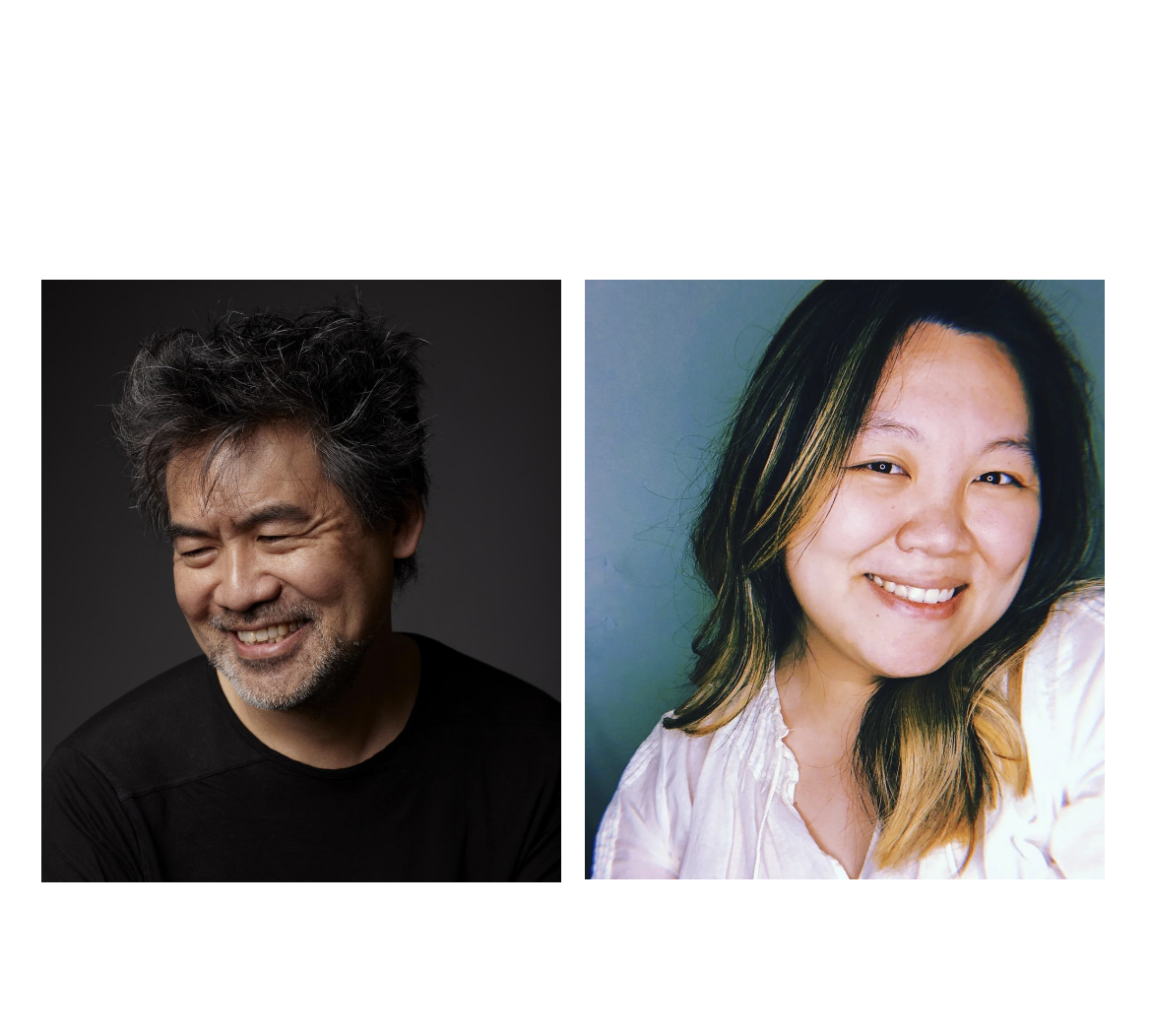
I learned of David Henry Hwang’s plans to revisit his 2002 musical Flower Drum Song from Mark Harris’ October 2025 profile in New York Times Magazine. Hwang, in addition to his career as a lauded playwright and librettist, is a professor emeritus of Columbia University, the school I currently attend. A funny thing can happen when working professionals, especially those of great acclaim– Hwang is a Tony award winner and three-time finalist for the Pulitzer– are your professors. You almost forget they are people in the larger world outside of the structure of a graduate program. This is how I felt reading Harris’ piece, which I did for an assignment for my school job where I also learned that the dramaturg– Annie Jin Wang who is also the newly appointed Associate Artistic director of East West Players– on the project was an alum of Columbia’s Dramaturgy program, the same one I’m in.
Hwang’s decision to revisit this piece is quite characteristic of his artistic process and approach– “From the outside, this tendency to revise might look like an inability to let things go. But for Hwang, the impulse comes from an understanding that a piece of live theater is always in dialogue with the context in which it appears” wrote Harris– but the choice to undertake this project with a former student felt significant and like a clear representation of Hwang’s duality as artist and teacher. What does it mean to suddenly find yourself artistic partners with your former professor? I realized I wanted to ask and reached out to Annie to set up a time to speak. Perhaps more so than other, I was extremely curious to learn about their collaborative dynamic and how a dramaturg helped on this projection of creation and revision simultaneously.
Flower Drum Song, in its original Rogers and Hammerstein form, is a piece that plays great significance for both Hwang and Wang as an example of how Asian Americans could be represented in the American Theater. Earlier this month over Zoom, we discussed this, as well as the particularly prescient nature of this project, and its perfect placement as a piece for The East West Player’s– the oldest Asian American Theater Company in The United States– 60th Anniversary season, performed in a Theater named after David Henry Hwang himself.
This interview has been edited for both length and clarity.
EB: David, why did you choose to return to this show?
David Henry Hwong: I guess it was about a year and a half ago now that Lily, the artistic director of East West Players, and Annie and I first started talking about a work of mine that might be appropriate for their 60th anniversary season. I, pretty early in the conversation, brought up Fire Drum Song, because I feel like it’s a work that looms large in the API cultural history and imagination for both wonderful and complicated ways. I revisited it for Broadway in 2001, but 25 years have passed since then. In the 90s, I felt there was stuff in the original Hammerstein Fields’ book that was creaky. Looking back on my own book, I felt the same way. To be able to reconsider the piece for production in the nation’s oldest AAPI theater that I also have a long personal history with… tt just seemed like the right fit.
EB: Annie, how did you get involved? What were those early conversations–about how to approach this and what might change–like?
Annie Jin Wang: In some ways, I’ve had a very long history with Flower Drum Song. I worked, as a dramaturg, on a production with Lily for a theater company in the Bay Area in maybe 2019? I was in graduate school at the time so it was remote. I joined the East West staff this past November, and you know, no matter what company she’s leading, we’re always in an ongoing conversation about artistic programming. And so when we were thinking about how to program the 60th anniversary season, of course we thought of a show by David because he’s the namesake of our theater space. He was always going to be a part of the season.
We had gone through a Rolodex of David’s plays, and we were really interested in either Flower Drum Song or M. Butterfly, but we wanted David’s input to see what piece he’d be more interested in.
I was excited to take on Flower Drum Song. I’ve always loved the movie. I studied it in college. It was really exciting to think about the conversations about the musical today. Even if there are bits that are, as David described, creaky, it’s still one of the only films where you get to see Asian and Asian American artists sing and dance and act in a variety of styles, and really be considered Americans and be seen as Americans, not, be, you know othered as Asians, but be fully embraced as a Western in an American style. The visuals and musical vocabulary are really profound, and groundbreaking, even while being from 1958. I think all of those things together just made it such an exciting pick. And then, of course, you know David, wanting to rework the book, and the opportunity to really think on a textual level about what the piece can say to audiences today was really special.
EB: David, when was the first time you encountered the original Flower Drum Song?
DHH: I can’t point to a specific date or, you know, I was a particular age. It was on television a fair amount when I was a kid, and Annie was talking about, kind of, some of the revolutionary aspects of the original 1958 production. And I think it’s significant that you know, up until, to the best of my knowledge, through the entire history of Broadway, prior to 2015 there was only one musical in which Asians were portrayed as Americans. If you think of any other of the classic musicals, they’re always set abroad. And then, when performed in America, Asian Americans are playing foreigners. So, that’s one of the reasons it looms large in the API consciousness. And so when I first saw it, I had a reaction that probably is similar to the reaction of other Asian people, which is, as Annie says, this amazement at seeing people who look like us perform this gorgeous Rogers and Hammerstein score at the highest level. And then, there’s also stuff that felt uncomfortable, because, in spite of the exceptionally good intentions of R & H, they weren’t writing from the community and there’s material that doesn’t represent us. I like to point to a lyric in the song, Grant avenue you travel there in a trolley, in a trolley up you climb. Who’s the you in line? It’s not someone within the community. It’s from the point of view of outsiders looking in. That’s what we sought to change in 2001 and are hopefully doing so in an even more authentic, more honest, more community-oriented way in 2026
EB: Are there any examples of things that felt creaky in the 2001 script?
DHH: There are a lot of jokes that are no longer in the script. One large change is the central love relationship between Ta and Mei Li. You know, I became increasingly conscious with Annie and Lily’s input, that there’s a lot of reasons that he falls in love with her, and there are fewer reasons that she falls in love with him. And maybe that was okay in 2001 or wasn’t really okay, but it was sort of consistent with Broadway mores at the time. And now, I think in this version, we’ve tried to create a relationship where that feels more equal, where he treats her better and gives her more, and he grows as a character and a person in order for the relationship to really work out.
AJW: For the 2001 version, David introduced these two new characters of Chow, or Zhao, and Harvard, who in our version is sort of Linda’s friend and confidant. One of things I really loved about the work that we’ve done for this version is that we’ve really, across almost all the principal characters, strengthened everyone’s storyline. And so I think, you know, in 2001, Harvard was a character largely there for comic relief. He’s a character who, in addition to being queer coded, is also an embodiment of young an Asian American person trying to live up to the stereotypical academic expectations set up by their parents. His name is Harvard because his parents named him after Harvard as a way to place their hopes and dreams on him, but he went a different direction.
One of the discoveries we made as we were workshopping this new version is that Harvard goes on his own journey and finds people with whom he shares what is referred to as “a new way of living,” which is also a lyric from Grant Avenue. I’m really excited for people to see how Harvard has developed as a character. And then, also, there’s Mei Li’s love interest Chao who represents the unassimilated immigrant experience. I haven’t seen the 2002 version, and I never actually saw the 2019 version either, but I think it’s kind of common to read into the Chao character as being a little more pragmatic compared to Mei Li and Ta who are part of the artist class. In this version Chao has become a super viable love interest for Mei Li and offers some really important things about her cultural identity and the place that they come from. And so, to tie back into David’s point, I think that making Chao a more compelling character has also forced us to make Da a more compelling character.
EB: David, how have you traditionally worked with a dramaturg? Annie–beyond a specific project– what is your approach to dramaturgy?
DHH: I probably have my longest term dramaturgical relationship with Oscar Eustis, who was a dramaturg before he started to run Trinity Rep and now the Public Theater. I think that what I’m looking for in a dramaturg is somebody who tries to understand what it is that I am intending as an author, and then helps to guide me to be more effective. In a way, I think, I think it’s kind of like therapy, because, you know, a good therapist tries to understand what the patient really wants, and then helps them to achieve that.
I got to teach Annie in one class while she was at Columbia, and was really impressed by her back then. We had a conversation about M Butterly that really cemented her importance in my life. We had a conversation about the two versions of the script from 1988 then the revival in 2017 and she told me some reasons why she thought the ‘88 version was better than my 2017 version. I thought about it and realized she was right. The level of analysis impressed me and her willingness to express it to me impressed me. This was before Anne became Associate Artistic Director at East West players, but it made me realize that when I do this show, I would like Annie to work on it, and then it all worked out.
AJW: Thank you, David. I graduated in 2020 straight into the pandemic, which was awesome. I really thought I was never going to work again. Over the past five or six years, even though I talk a lot, the largest part of my process as a dramaturg has been listening. Really taking the time, as David said, to try to understand the vision of the artist or writer I’m working with. What they’re wanting out of a process. I really feel that the process is just as important as what audiences see on stage, because shows come and go. We’re about to head into tech for this show, and I’m sure that we will have an insanely good turnout and break records. Everyone’s gonna have an amazing time, but one day it is going to be over. But I’m hoping that the time David and I have spent together in conversations will carry forward into the future, whether on future collaborations or as we work on different projects.
I think dramaturgy is, especially for new work– and this is a new work that is just got that’s kind of disguised as a revival— is being mindful of the fluidity of process. As we take each steps forward, we have these long term goals and end products we’re reaching for, but there are so many processes within that.
I feel very strongly about not imposing an institutional dramaturgy on projects. Working on this project while being a member of staff at this institution producing it is, I hope, not going to be the norm for me. But I respect David so much and know who wouldn’t, who wouldn’t joyfully accept the opportunity to be in process with him? So yeah, I think it’s a lot of listening, it’s a lot of adjusting, and it’s a lot of building trust and having conversations before we start any work.
EB: What was the dramaturgical process of this production, for both of you? Annie, what was it like seeing the script for the first time?
AJW: I hadn’t read Flower Drum Song since 2019 18, and conversations around the Asian American community have also developed so much during that time. I didn’t want to take what I remembered from 2019 into this new process, or the possibility of a new process. The first thing I did was go through the script and note down all the questions and structural arcs that came up.
I’m very non-prescriptive as a dramaturg, so when I take notes, I normally keep them in my brain. I really wanted to understand where David felt he was in this piece. Where did the changes sit for him? This was early on in the process, during one of our first meetings. For the next year or so, David, Lily and I were in conversation and had check-ins as David worked on rewriting the script. We had a workshop in January with all the members of our principal cast and some ensemble members. And that was really a workshop for David to hear this new script for the first time and for us to really interrogate it. David, I think you did one more round of edits before we went into production. And then you were with us for the first week of rehearsal, where we did slightly more work on the script. Now, the company has been working on staging the piece over the last couple of weeks and we’ve been communicating about details over email– for instance, a line that might sound a little sticky in an actor’s mouth.
DHH: Going back to that first phase of discussion about the extent of changes. I had thought I wasn’t going to make any big structural changes. I compared it to the last season’s revival of Yellow Face on Broadway, which is basically the same play, but with a lot of fixes and tweaks and cutting in an attempt to make it better. And that’s, I think, pretty much proven true in this version. It is structurally very much the same as the version that was on Broadway, but hopefully it’s smarter and more authentic, and that all those changes have been made with love.
AJW: One thing I’ll add is that sometimes with these revisciles, as David calls them, there’s maybe an implication that the production is apologizing for something. I actually feel with this piece, it’s the opposite. We are so unapologetic about what this piece is that, you know, Roger and Hammerstein both helped Asian and Asian American performers take a big leap forward in representation, and there were just some mores of the time that could not be avoided. And so I think with this piece, there is some course correcting of the cultural context of the 1950s, which was before the term Asian American was even coined. Instead, we are revealing truths that were present in the original musical and are also still relevant to the conversation that we’re having today. My hope is that this production will recall the timeless qualities of Rodgers and Hammerstein’s musicals and will have a life beyond this production.
DHH: There are ways in which the story feels much more urgent now. When we did the show at the turn of the 21st century, for instance, there was sort of a national consensus that immigration was a good thing and that America was the country of immigrants. And so to do a show now in which the lead female character is undocumented and asserts the importance and joy and power of both our community and the process of immigration just feels much more potent in terms of the show’s relationship to the world that we’re living in.
EB: My last question is for David… do you use the same pillow to write every day?
DHH: If I’m at home, it’s the same pillow. I mean, I think it probably gets, probably not very healthy in terms of bacteria, but I think it got replaced maybe 20 years ago, so it’s not exactly the same pillow when I was, you know, 20 years old, but, yeah… it’s a well worn pillow.
Featured Photos by Gregory Costanzo (Hwang) and Brian Hashimoto (Wang)
Leave a Reply