
Shaun and Abigail Bengson spent the early days of the COVID-19 pandemic sequestered in an old farmhouse in Vermont. At a time when social connection was more digital than ever, their concerns were grounded in the body. They struggled with fertility, migraines, and chronic pain. They attempted to conceive while Abigail’s mother slept in the next room. They potty-trained their screen-addled toddler. They played in the snow. Their world was tight and full of fluids.
In 2021, the duo was commissioned by Arena Stage to create a new piece for their filmed musical series. From this, My Joy Is Heavy—the 27-minute YouTube version—was born. That film served as the basis for a stage show, also called My Joy Is Heavy, now playing at New York Theatre Workshop. In adapting this deeply personal piece for the stage, director Rachel Chavkin and choreographer Steph Paul had to look back at a time many of us would rather forget—an ironically universal period of isolation.
I spoke to Chavkin and Paul on Zoom in late March. The questions I had prepared tended toward the “heavy” half of the title—the grief at the heart of the show—but the longtime collaborators insisted upon the “joy.” With enthusiasm, humor, and warmth, Chavkin and Paul discussed the unifying potential of the heartaches that isolate us, the process of creating character from memoir, and the ways we move when no one is watching.
This interview has been edited for both length and clarity.
Annie Rasiel: The subject matter is really personal and, as the title suggests, heavy. How did that weight shape your rehearsal process?
Steph Paul: I’m passing you the mic, Chavkin.
Rachel Chavkin: The subject matter is grief and loss. Grief can be very isolating, infamously so, but for us as a creative team, grief has been an incredible unifier. The Bengsons are telling a story of a very specific loss that they suffered, but I approached it through the potential for grief that my husband and I live with daily. He has the genetic mutation for early-onset Alzheimer’s, which is something he is very public about for advocacy purposes. He’s been part of an experimental drug trial for fifteen years, and now, at the age that his father died of the disease, he remains virtually asymptomatic. I won’t tell Steph’s story, but she has a connection to the material too. Creating community in grief and finding joy, to quote the other half of the show’s title, amidst the heaviness has made this process feel like the most intimate and beautiful family affair.
SP: In our industry, people will often say, “We’re a family.” And I usually feel like, “Oh boy, I have a family! I don’t need ten million families.” I give a little side eye to that, because that term can be an avenue towards taking advantage of people. But in this case I fully agree with Rachel. We have felt like such a team, such a squad, such a fam, and we’ve gone on a difficult and beautiful journey together. Grief is not easy. It has brought up things for all of us. For the last two years, I was dealing with some personal health stuff, and even though the specific loss that the Bengsons experienced does not exactly mirror my struggles, their ability to be so specific about what they’re going through opens the door and lets people in. I can say, “I’ve never tried to have a kid before. I’ve never lost a child.” But I have had my own dream, my own castle of dreams that has been torn down. I understand what it means to believe you’re moving towards something and then face a detour. The joy comes in when you ask what opportunities lie in the detour. It’s the ways in which we gather, the ways we joke around.
In rehearsal we had to ask, “How are we finding breath? How are we taking care of our bodies? How are we honoring not just our artistry, but also our humanity?” Rachel is such a force in that way. She insists on having both rigor and joy in the room. I’m really proud of the space that we held. We honored our artistry and skill as well as our human complexity.
AR: Do you think being a predominantly female creative team contributed to that level of sensitivity and nurturing?
RC: You’d have to assemble a group of dudes and have them go back in time and make the show. I can say that Steph and I have another partner in this triumvirate, Or Matias—who is, I think not coincidentally, a dad and a very devoted partner to a femme—so I can say that the sensitivity has been held by more than just women.
AR: This play takes place during the early days of COVID, which was a time that, like grief, was both isolating and unifying. How was it to revisit that time? Do you feel like you have sufficient distance from it to have perspective?
SP: I felt ready. I felt close enough to the experience to feel it in my body, but distant enough to go back with bravery and to feel like I was operating from the scar and not the wound. I have left this process with more admiration for artists. So many of us spent that time in a cocoon trying to make sense of our work. You can say time and time again that your art is not your identity—and I’m really trying to separate, because I do think it is important to remember that I am not just my output—but when your work is such a part of you, it can get tangled. A lot of us in the pandemic were trying to make sense of who we were as artists when the audience was gone. We had to become our own audiences. It can be scary to have to look yourself in the eye like that, but it’s important work. I think a lot of important life work happened in the pandemic, but oh boy, it was challenging.
RC: I have nothing smarter to add to that one.
AR: It’s so interesting that you said lockdown was a time that artists had to be their own audience, look themselves in the eye, because this is an autobiographical show. What is it like to work with people who are telling their own story?
RC: The show is rooted in memoir, but it’s also very theatricalized. There is a slow, inevitable process of allowing yourself to become a character. Abigail and Shaun are playing characters. When we were designing the program, I insisted on printing “The Role of Abigail” and “The Role of Shaun.” These characters are versions of themselves from five or six years ago. There’s creative license in that. There’s a lot of craft in it. Abigail and Shaun are adamant that they want the most theatrically effective version of the story, not necessarily the most literally accurate to their lives. We also talk a lot about questions like, “How do you guys fight when you fight?” and “How would you guys touch each other if you were celebrating?” And, as a collaborator of theirs, I’ve gotten to witness their dynamic together since 2014. It’s been a delight.
SP: My process starts when I hear the music and find how the music feels in my body. That’s when I started to understand what makes sense for the characters. But I also can’t divorce the truth of the bodies that I see before me: the bodies of Abigail and Shaun. There’s a bit of a dance to navigating how I honor how their bodies already move and what their superpowers already are, while also honoring my artistry and the inventions that I want to create for this stage.
I have to set them up for success so that what they are doing on stage feels organic, like it is just coming out of them. I remember the most ridiculous things happening during lockdown. Remember when everybody was going on Instagram Live at one point, just to film themselves doing nothing? I think I did that! It was the most bizarro stuff. How do you retain that quality of somebody who is without a stage? How do you find that edge of how somebody without a stage would allow their body to move? That sort of stuff is so fun for me. It becomes a bit of a science project. You don’t want to add too much gloss. You don’t want to dull what’s human.
RC: Steph is one of the great choreographers of nondancers while also being able to utilize and weaponize trained dancers to their fullest potential. The humanity of Steph’s choreography in this show, rooted in the Bengsons’ truth, is just delish.
AR: The body is so present in this piece. It’s about pregnancy, it’s about chronic pain, it’s about fear of illness—there’s so much rooted in the body. How did that shape the movement that you developed for the show?
SP: There was no conscious “now I’m gonna make us dance.” It was more organic.
RC: Abigail and Shaun started the process with the short film they made. There were tons of offerings in that film of ways that their bodies wanted to move during the musical numbers. They’re very alive when they sing. Steph picked that up and ran with it.
SP: The movement also came from being in relationship with them as people. The offerings from the film were like little amuse-bouche, just a little taste. Then I got the other ingredients from watching their bodies in person and honoring the language on the page. This text is so alive. That’s when I know that I can really find my way into something: when I can just be in relation to text, and my body is already starting to respond. They are exceptional musicians, exceptional storytellers. The language sings. They open up a portal to somewhere beyond this earth for me and my body. I travel. So in developing this piece, I asked myself, “How do I want to move when I’m not on earth, when I get to fly?”
The body is always my avenue into stories, and their bodies are already so alive. I just got to honor it and shape it and be deeply curious. It was really fun. It was really natural. And they’re so game. When you have artists in a room that want to engage in the back and forth with you and want to imagine together, the sky’s the limit.
AR: It sounds like you were doing a lot of deep listening and paying attention to what was already there and what their instincts were.
SP: Without listening, you’ve got nothing. That was a responsibility for all of us. We had that video as the origin story, and then we had to ask, “What is it about the origin story that we want to honor? What do we want to put on this stage today?”
AR: The last time the two of you worked together was How to Defend Yourself in 2023. What’s it like to work together again?
SP: Such a pleasure.
RC: Steph and I really got to know each other during the pandemic. We had so many extended conversations on Zoom, including very deep work with a leadership coach and our playwright and third co-director, Liliana Padilla, to think deeply about what each of us does. We would ask, “What does each of us care about?” And happily, it turned out those were actually really different things. There is overlap, but our strengths and interests are more complementary than duplicative. Steph and I came into this project with a deeper understanding of what our collaborative practice might look like than pretty much any collaborator I’ve ever begun a process with. I find it incredibly joyful and intimate. And there’s the family of it all. I think of Steph as part of my found family.
SP: Same for me. When you work with people, they don’t have to become your homies. They don’t have to become your fam. But Rachel is like a triple threat for me: she’s my collaborator, my friend, and my family.
RC: You didn’t mention what a good dancer I am.
SP: Rachel makes me laugh a lot, and I think it’s so funny when I make her laugh. It’s not when I’m trying to make her laugh. I’ll just look over and see her looking at me and laughing, because I’m doing something peculiar. The beauty of it is that I feel comfortable being my full self around her. That’s what you want. You want to work with people that you can feel brave around. We didn’t know each other as well the first time we worked together, so there was a lot of learning and building comfort on the job. I had recently moved to New York, so I was still making sense of my life in the city. This time around, I can feel in my body just how much more settled and grounded I am. We’re able to have even more fun. We just know each other, and I really trust her. I like her taste. She trusts me to do my thing. I trust her to do her thing. We just want to see each other fly and succeed. And isn’t that the whole point?
AR: That’s the dream.
SP: It’s really cool. I told her she’s stuck with me.
AR: It sounds like you’re happy to be stuck together.
RC: It’s great.
Tickets for My Joy Is Heavy can be purchased here.
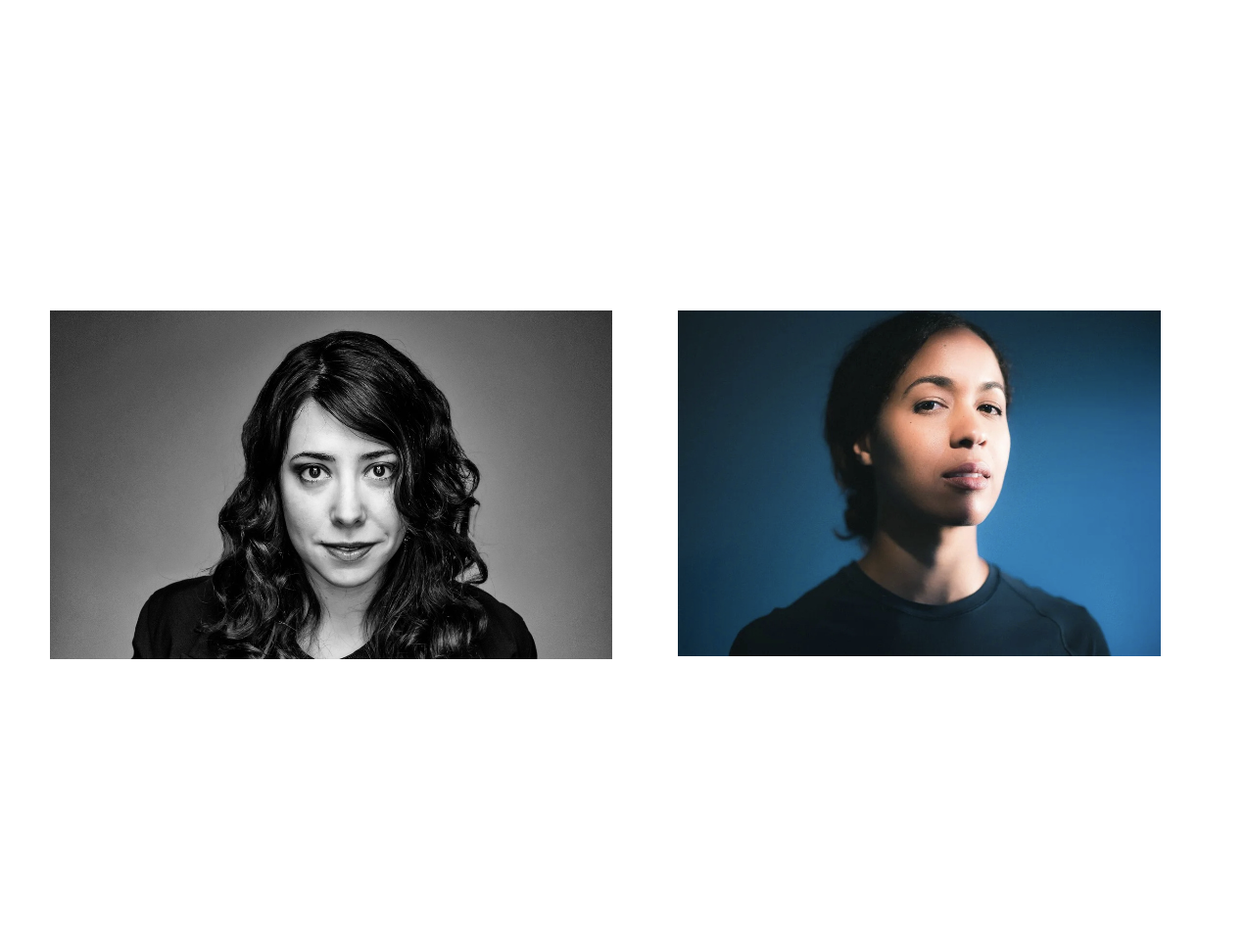
Featured photos by Chad Batka and Joe Mazza – Brave Lux.
Leave a Reply