
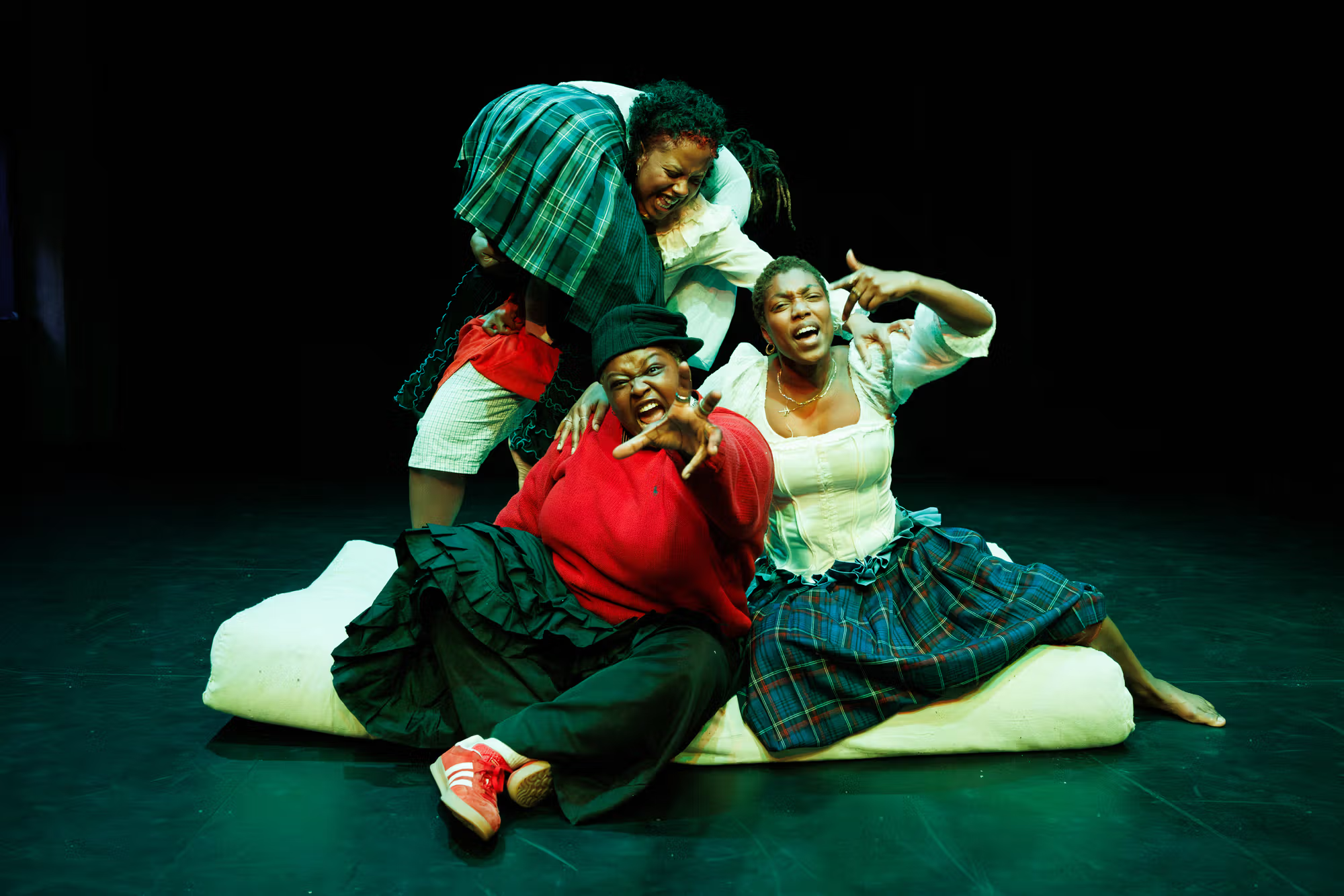
Abrons Arts Center on the Lower East Side of Manhattan is known for its accessible public programming and roots in the neighborhood’s working class. Bi-annually Abrons selects two early career artists for an 18 month supportive residency, offering resources to residents to develop new work with a public premier. I had the pleasure of witnessing the final dress rehearsal for one of the 2025-2026 year residents, Symara Sarai, a dancemaker who I have admired for years. She is also a former acquaintance at Purchase college where we both studied dance with a concentration in composition.
Upon entering the experimental theater at Abrons Arts Center, the stage was set with three sculptures (or chairs) made of fabric and vinyl wrap evenly spaced out evenly in a line upstage. The space was surrounded with cherry red vinyl curtains, executed by Caz Slattery and conceptualized by Sarai.
Eventually the buzz from the audience settled as the double doors shut and we knew to shift our attention from conversations among ourselves to the stage. To much our surprise, our attention was quickly diverted back to the bleachers where we sat, as the performers stomped up and down the risers. These risers are like bleachers at a high school football field. The loud banging was an assault to the ear drums and a thrilling experience. Some members of the audience in the aisle seats could be seen almost flinching away as the performers passed by. The stomping was not militaristic but rather noise making, for the sake of noise making, and the unevenness of the stomps coming down the stairs left me uneasy.
Performer Kentoria entered the space as the other performers remained in the shadows of the sides of the bleachers. They proceeded with the delivery of a monologue addressing a “bitch with a chopped bang”- Kentoria expressed their distaste for this figure and her hairstyle. The three other performers echoed Kentoria’s words like a chorus of supportive friends. The monologue began to distort as movements took over and Kentoria began to manipulate her monologue. It was hard to imagine that this was choreographed: it was effortlessly precise.
Kentoria’s performance was the first vignette of many- not many. I would guess at least 20. The notion of counting did not occur to me while being taken through this pastiche-ified style epic. These different sections offered a glimpse into their collective psyche, where different conflicts and disagreements between performers / or between audience and performer are breaking out, but any specific source of the conflict is not explicitly discussed. The small sections materialized as bursts. In big displays of emotion–rage, lust, envy. Most of the time inflating with energy, until the space erupted with the performers displaying a physical or emotional extreme. Recalling Kentoria’s solo that I mentioned in the beginning of the piece. A natural progression of the choral support and from the offstage dancers lead them onto the stage and onto all fours, barking on all fours ferociously and fearlessly at the crowd, and at each other.
Writing about the display of emotions feels a bit misleading, because the anger expressed was far from binary. I am emphasizing the reds and oranges color wheel of emotion–this is true for some parts –particularly in the “cuss out” where the performers get right into the audience and yell at them- saying that they look stupid, or just down right saying “fuck you” to their face. But I would be missing arguably more important bluer undertones of tenderness and vulnerability that different sections approached through chaos.
CHIMI, the performer who anchored the piece from a table on stage left, provided live musical playback, as well as her own voice and was often tasked with advancing the amplification of these scenes. When succeeded in facilitating Performers Kentoria Earle, Symara Sarai, and Kashia Kancey into an almost psychotic state, she slipped into the abyss, as her music echoed and amplified. In one scene the dancers engaged in acts of pulling the vinyl curtains that surrounded the space, as if trying to tear them from where they were fastened almost 40 ft above their heads–the movement taking the dancers as well as the curtains further and further into the center of the space and towards each other, crossing paths with one another. The movement got bigger, and the sound provided by CHIMI continued to get louder. Among this spectacle. the lights got dimmer, and bluer.
I was left with so many questions about if this violence, tenderness, inhibition was intended to have political undertones. At home I was still unpacking so much of my own experience. A couple of weeks later I sat down with Symara in her Crown Heights home on a Tuesday morning and asked her questions about her work and the process that created “Angelic Architectures”.
RD: You describe “Angelic Archetectures” as a dance play, correct?
SS: Yes.
RD: Have you called other pieces you have made dance plays, or is this the first time you’ve made a dance play?
SS: This was the first time that I felt like I called something a dance play because it was the first time I felt like I sat down and intentionally tried to write something. I knew that I wanted every section to hold text, and we generated it not only through writing, but obviously through improvisation. So I was like, it doesn’t feel like just a dance, even if it doesn’t follow the linear narrative.
RD: But calling it a dance also didn’t feel right.
SS: Yeah. I also just wanted to make a play and call it a play.
RD: What’s better: a dance or a play? If you had to choose one?
SS: That’s so controversial, but I want to say it’s like a play just because when I think about a play, I think of accessibility. A lot of the time, like when you put words to things, people have an access point. Whereas with dance more naturally, like I feel like you can feel it emotionally and energetically, but for a lot of people, it can feel abstracted. And it’s like, how do I get them there, to the point of feeling viscerally. I feel like watching a play can someone be like, oh, right, you said something and I say that too. So I think from an access point, play is my answer.
RD: I have shared with people that I am an experimental dance maker, and they say “So the audience is having the least fun and the performers are having the most fun.” When people make these comments it can come off as offensive, of course, but also I get it, if you’ve experienced feeling very alienated as an audience member, and that’s very valid.
SS: It’s interesting. You know, I feel like when I’m making, I’m always considering the audience where I feel like, I don’t know, a lot of people rebel against that. Which is fine.
RD: I want to ask you about who influences your current methodologies.
SS: I feel like when I graduated working with, like, Joanna Kotze influenced me a lot. She works a lot in improvisation. I feel like the format of how she set up rehearsals really changed things for me. She would start every rehearsal, like, hour warm up. like then go into a practice and like then get into like the meat of the work. This was before I knew how to formulate my own thing.
RD: Do you start making your dances in the same way for the most part?
SS: I think so. It starts off with primarily improvisational parts that I eventually set. Like these are the ideas and things and we’re like consistently shaping their improvisations.
RD: With angelic architectures, you kind of took a departure from that? if that’s correct.
SS: It’s kind of different. We started in a few different places. I started with wanting to make a piece about fighting. I want to fight. I wanna fight something. I want to fight someone. And so we came in physically first. How can we fight? Let’s fight each other. Let’s fight for space. Let’s figure out how to fight. So that was like part one. Then part 2 is like, how do we add text to this? What does it mean to like to fight with words? We had a residency where we were just writing and generating. We worked with this writer Trebien Pollard, and he came in and he guided writing exercises, texts, spoken exercises and helped us really figure out how to put the text in the piece. And then the 3rd part was well, and in between, like, it was like me choreographing small sections. I was left with all the material and then I was like, how does it come together?
RD: Having the writer come in sounds like it was such such an amazing resource!
SS: That was a good moment. That was like the thing that I also learned from Joanna. I was like, oh, every choreographer should always have a writer with them. I’m like, you know we went to fucking Purchase. I didn’t know how to write my shit. So I was like, we need to have people who articulate well.
RD: I can say personally I feel like writing has also informed my practice when making dances, being able to, like, write and have that feedback loop–writing about my own process. Do you feel like this pushed this work forward more?
SS: 100%. And it made me also like, know what I was doing.
RD: I feel like I was watching ideas be stretched to their very fullest extent in this piece. I was like, Samara’s mind must be, like, exhausted or something. But now I’m like, okay, there was an effort from multiple people helping to bring these scenes to their extreme.
SS: We had time too. Yeah, it’s really cool. We have 18 fucking months. Which is crazy. I’m like, everyone deserves that residency. Truly. It’s gonna change my life for real.
RD: Could you describe what this piece is in your own words?
SS: It feels like a rage fever dream of, I don’t know, black femmes losing their mind in a way where there’s no judgment after. Like, you get really drunk, and the next morning, you’re like, oh, I feel bad about it, but it’s like, you don’t have to wake up and feel bad about it. We just got to put it all out, and that’s that, and it’s okay. I think I was trying to move towards asking like, how can we just, like, do things? Because I think I often feel bad about how I engage day-to-day. So how can I create a container of like no one gets to feel bad about the decisions they’re making? And what does that mean? And how does harm exist? How does accountability exist? And I was really fascinated to see that, like, when some things were eliminated, everyone felt okay and safe. And if anything, like, maybe more emboldened to dialogue things.
RD: You were exploring what new things could be created in a less judgmental space, where there are no consequences.
SS: Yes
RD: What stood out to me about the piece was how it read as a lot of different vignettes or scenes. Sort of a pastiche, but with bits of narrative. From the beginning, was this the idea for the format?
SS: I think, yes, I don’t feel like I really know how to make outside of that. Because I feel like I don’t know what to make outside of that. I am like oh, this works. I put it together and it’s inherently like a bunch of stuff. Sue Bernhard at purchase was always like “pick an idea.”
RD: Really? But you couldn’t depart from this approach!
SS: Yeah. I was just like, that’s what it is. And that makes sense to me.
RD: Yeah, because when I think of a more traditional concert dance composition, it’s like a continuous flow of ideas with subtle lighting changes that tell you you’re in the new section or, new music or whatever. But this was very fragmented in a really interesting way, but it also was also surprisingly natural–because it all was so responsive. How did the collaboration work with CHIMI?
SS: I have known CHIMI for a long time. I brought her and I thought she was just gonna make music and do playback. Then through her being in the space, because, like, I was like, you’re just gonna do all the scores with us. and like to format the scores for everyone altogether, solos, duets, like 3 minutes each, whatever, we’re gonna be inside of an hour score. But then I was like, oh, she’s a performer. And, like, we quickly realized, like, when she wasn’t there, we were, like, oh, this isn’t what it was when she’s here, even if we have her just on playback. So I was like, you have to be in the piece. And she started to be more involved, like as you saw–she talks a lot.
RD: She’s sort of like this narrator-like character.
SS; And I feel like, like, echoes the things that we’re saying and it’s like, did you get it? Like, okay, I’m gonna give it to you in case you missed it.
RD: Relating to the accessibility and considering the audience. Yeah. Kind of like a delivery mechanism for certain ideas that might not work for an audience without the text. It was really interesting the she had her station over there with her equipment and it’s like very concrete, part of the space–and then there you three, Kashia, yourself and Kentoria. It was kind of like the roles were established from the very beginning.
SS: Yeah. And she wanted to, even when it was chaotic, it was like she was always in it.
RD: And then CHIMI kind of faded out when you guys were like pulling the curtains or doing other very physical things and three of you sort of lost yourselves in the score. But then there were parts where everything was very responsive with the chimney.
SS: Yeah. I mean, at first she really was like, I want you to hide me. And then she started wanting to. Well, I was like, no. Yeah. I was like, she was like, put me in the back, and then she was like, how about, like, how about my costume drape thing and you can’t see my face. And I was like, no, you’re not gonna be like this, like, ominous, like, voice making figure. Yeah. I think she just wanted to, like, feel shielded. Which is valid, but I was like, you have to be in it all the time like us.
RD: Kentoria’s solo in the beginning, going on with the text about the chopped bang and the thing and then it sort of starts distorting and movement like comes into it. And I was just like, how was this made?
SS: That text, she made that shit up off the dome. And I was like, this is insane.
RD: Well her delivery was so earnest throughout the monologue. In the movement too. I was like, is that improv? It was done with such precision.
SS: I mean, she made the text on the improvisation and we solidified it and then I made all the movements on her to go with it. And then I like changed some of the text, but she just made that shit up, all cut down. It was crazy.
RD: When you guys are coming to the audience and kind of getting in the audience’s face..
SS: With the class out?
RD: The cuss out, yes. This could just be me because I don’t know if this was the intention. But I found myself hyper aware of my actions in response to how intimate the experience felt. Like, I’m like, what expression is my face giving off? Am I responding appropriately? Was it your intention to turn the audience’s focus onto themselves and how they’re kind of performing as an audience?
SS: I mean, it’s awkward, right? As an audience member, it’s awkward. It’s interesting because, like, for a lot of that section, I couldn’t participate in the cuss out section because I had to set it– so I had to be in the audience. So I was like, what does this feel like to receive this? And for me, it felt like a charge. Like, I almost felt like I was reaching something. I don’t want to say but it felt good.
RD: it was like… Was it therapeutic for you?
SS: Sort of. Yeah, I was like “cuss me out.” I was like, “hit me. Hit me in my face.” Like, it became like some BDSM shit. But like, I was just like, oh shit, this feels good. Yeah. And I think I was just hoping for that experience for the audience. I mean, we’re not going to hurt you actually. I hope that you just sit there and like, you’re like, yeah, like this feels good. Cuss me the fuck out. Tell me I’m stupid.
RD: I wish I was a little more ready for that, I guess, because I think I was very like… Um, felt put on the spot.
SS: Yeah. I mean I think a lot of people felt that.
RD: This makes me wonder what the intended audience is, kind of, because you have this institutional support from Abrons, and that is going to draw a certain audience. You’re gonna have your community, your audience who follows your work. So I want to ask, who do you perform for in general?
SS: I mean, I think I just always, like, priority one is, like, black queer people, and, like, the responses were quite varied. I think it just depends on who’s there that night and what’s happening. Abrons is so good at reaching out to the LES community. There’s like people who’ve come and they’re like, hell yeah, like that cuss out I know that shit.
RD: Right. Some audiences felt very embraced by it.
SS: Yes. And they’re like charged by the idea of a fight. like,” go get her!” you know? And there’s other people who are like, “I’m not familiar with this” and like, “what does it mean?” And like, “I want to give you your space.” Like they are putting a lot into it, which I understand because it’s a large thing, but maybe there’s just less direct meaning or something like that. Maybe it’s just we, wanted to just yell and cuss out and that’s it. And like, how did you feel? And like maybe you felt bad. Yeah. and awkward or like maybe you felt really good and I think the variation is important because I would feel weird too. And we put the pre-warning, like, there will be profanity and yelling, but, like, you can’t really expect it. And especially if you are someone, you’re just sitting there and you show up in your outfit and someone’s like, “you look stupid.” You’re like, what the fuck? It also depends on the energy of the crowd too, because there’s crowds that were like cussing with us, and that would have probably changed your experience.
RD: So you emphasize wanting to perform for black queers. Do all of your collaborators identify as queer?
SS: Yeah, it was actually a very queer situation. My priority was making sure that the performers were black and queer. Very queer, very lesbian. I don’t think Kashia or Kentoria or I have just ever been in a room where we’re only working with, like, black lesbians, and it was just… It was great. Yeah. I think it helped a lot of us identify, I think, a little more boldly with our queerness too.
RD: And what do you think that, like, brings him to the work? Like, aesthetically or, like, what relationship does it have with what you’re doing on stage?
SS: I think my primary thing was like, I want to work with black queer people because I want to feel like when we get into moments that are like intimacy, that there’s like a shared understanding, you know? I think that was like a primary thing. I was like, I don’t want to have to explain this to someone. I want them to just understand. I was thinking about it more because we worked a lot with pleasure too. So I think that’s why it was so hyper important because I had a collaborator before and I was like, we’re gonna go into this, and she was like, I can’t do that. And I was like, I need to just work with black queer people.
RD: Well, I think, like, to be queer could also imply that you understand that there’s like overtones and undertones of a lot of these things, even if it’s like an aggressive score with fighting, nothing was totally absolute- Maybe this is also because not everything was like traditionally narrative in the sense of a play where there’s a direct understanding of why so-and-so is mad or whatever. What I’m getting at is that there is something maybe queer about the way it’s not all anger in the fights, that there’s this tenderness or something underneath it or like pleasure even in the fighting.
SS: Yeah, 100%. I feel like it would change. Like, I was like, you know, we’re fighting and I’m like, oh, now this is like a desire for me. Like, I find you beautiful and attractive and then it’s like a slap. Oh, we’re back. You know what I mean?
RD: That’s so real, because that’s the beauty of, like, really intimate relationships too. Even just with my personal life and friendships and partnerships, you want to get to those extremes and sometimes fight in order to regulate your emotions, and that is healthy. It’s not always healthy to hold all of this tension.
SS: Mm-hmm. You know, what I mean, as a maker, you deserve to have people in the room who are making you feel encouraged to be in your full spectrum. Totally. And that’s hard to find.
RD: Is it difficult as the facilitator and then you have the group of collaborators you like to like and feel okay with being vulnerable with them and in these containers.
SS: Yeah, for sure. It is hard to find. And I think that like, you know, I would bring in like Kalliope sometimes because I’d be like, can you help me say this? Or like, how do I achieve this? I want things to get wilder. How to do it without making people uncomfortable. Also I have to trust that these are adults and they’ll say no. There’s a point where I told Kashia I think this probably would be better if we kiss, and she was like, “no.” I was like, great, love it.
RD: Is there one part of this piece that has a significant impact on you?
SS: I feel like the part of the piece that I really hammers in the theme is the duet between Kashia and Kentoria. That is when it really feels like peace is becoming the piece. I was injured, so I just sat out and watched. And that feels like, oh, this is the work. The way they’re diving through their emotionality, how they like to be in teamship with each other, like the ways in which they separate and then come back. That to me feels a lot like the nucleus of the work.
RD: It must feel good to kind of create a system where they could step into that and you would sort of step back on their own.
SS: 100%. They’re fucking good. They’re really, really good.
RD: What did this piece leave you with in terms of feelings, memories, relationships?
SS: What did it leave me with? I felt, I think, finally a little emotionally exhausted. Which was super exciting. I think that I had felt prior to this that there was a lot inside of me. Like, I had a lot of energy and anger around, like, you know, I just, I feel like I had gone through so many transitions in my life and I felt like my emotionality was just like a fountain of like reoccurrence, like rage to like all of a sudden, now I want pleasure to, you know, it’s just like so much boomeranging. And I felt like after this, I felt a little emptied out. I think it was good because I think I need a little bit of a drain, you know what I mean? I felt my memories of it are just like, I feel so grateful, like, forever of CHIMI, Kentoria, and Kashia, like, best family ever. Yeah. I just, I’ve left with a deep gratitude for the collaborators. They’re just incredible. And I just, I felt proud. amazing. I’ve never made a piece with this much, like it felt like a work and a product and done.
Leave a Reply