
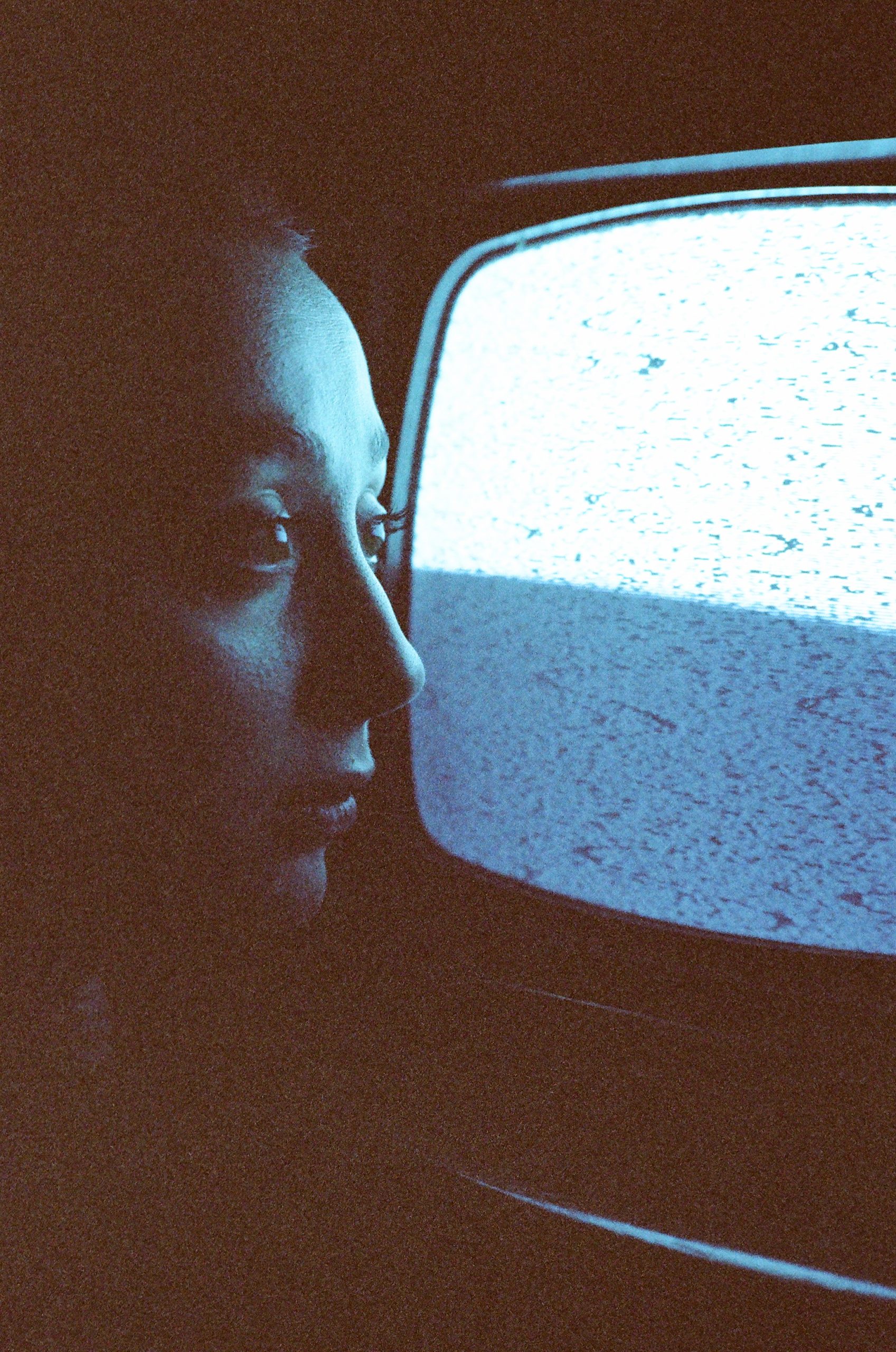
CULTUREBOT sat down with Madeline Bernhard and Hannah Hale—actors, directors, and producers for Adult Film’s upcoming show, MAIDS AFTER GENET, which adapts Jean Genet’s iconic 1947 drama of two sister maids, Solange and Claire, plotting in real time to kill their mistress. Bernhard and Hall have thrown themselves into an intense artistic collaboration. As they work to embody Solange and Claire and all of their blurred histories, fantasies, and hopes for a contemporary audience, they are already completing each other’s sentences. Part of Adult Film’s Studio Darlings series, Bernhard and Hale’s experimental vision for “The Maids”/“Les Bonnes” furthers the actor-led ethos and intimate staging that the Brooklyn-based company is becoming known for. They cross the artificial boundaries of actor/director/producer/audience as they tap into the desirous rage of Genet’s working-class, codependent sisters.
*The show runs September 10-12 and 17-19, with more seats to be added. RSVP for location.*

How did the two of you come together as collaborators? How did you decide to become “maids” together, to become partners in crime—maids in crime?
Madeline Bernhard
Yes—maids in crime! Hannah and I started taking classes at Adult Film at the same time, the same workshop with Ryan Czerwonko. The class had a Chekhov focus, and we worked on a scene together as Yelena and Sonya in Uncle Vanya. It was amazing. We did crazy shit. Part of the class ethos is to approach the work how you want to approach it. And so we thought, what if Yelena and Sonia are actually in love with each other? Because these characters are locked in these circumstances together? So, that was our first time working together.
And then you both played Marie in Adult Film’s recent production of Woyzeck.
Hannah Hale
I was Madeline’s understudy for two nights. For me to learn the part, we called it “Marie Boot Camp” — it was so fun, and it worked, because the Woyzeck process was so fluid. I use this metaphor, “building the bridge as we cross it,” that applies to all that we do at Adult Film. Woyzeck was a lot of fun to collaborate on.
MB
It was honestly helpful for me because I was both producing and acting in the play. The concentrated time with Hannah really helped me to hone in on what I was doing outside of producing. Instead of focusing on making the ‘thing’ happen, it was now very specifically, how do I make ‘Marie’ happen? The Maids felt like a natural progression of our work together.
What is your way of working with a classic text like The Maids? How do you approach the script and make it your own?
MB
It really does start with strong script analysis, starting first with the page, but then lifting the words off the page, not attached to any circumstance. You read it out loud and you let anything come out. It’s about working with the logic of the show alongside your inspiration and letting the two bleed together until you’re like, oh, shit, we actually have something. This is also why I thought The Maids was interesting to produce and a unique directorial opportunity for us, because Solange and Claire are all about that same kind of fusing and merging and getting lost in the other person.
HH
We’re all working in a really free and intense way. We were just working on the “Madame” scene today, which was really fun. We have a great actress, Ariana Afradi, who’s joining us from Adult Film and is familiar with our way of working.
What was your experience with The Maids, and why does it make sense to produce it now?
MB
I first read the play years ago with friends in my apartment, and I was really inspired by the archival images of when Cate Blanchett and Isabelle Huppert did it in 2014. But as to why now, it’s not necessarily like we’re making a statement. It’s more about making the work that we want to make, and letting any inspiration or connection that’s important come through. As an artist, I’m less interested in making a statement first, especially as an actor. When you work on a piece, I think the greater importance reveals itself to you. Frankly, there have been quite a few productions of The Maids in the last few years; there’s a reason that this play keeps popping up.
So for this production, you two are the directors, producers, and lead actors. What is it like having so much creative control, but also so much responsibility?
HH
Everything is your job, yet you have to give up control at the same time because you’re sharing it with somebody you love and respect and have an inner need to please at all times.
So very much like your characters in the show?
HH
Yes! It really is.
MB
That’s another reason why we wanted to work on The Maids, because we’re kind of sick little freaks. And the meta quality of working together is so much of the play.
HH
That’s what I’ve been thinking — Claire, Solange, I can no longer tell us apart!
MB
And this has happened a few times in the room where we got mixed up when we’re directing and when we’re acting. It’s really funny, and it’s not bad or caustic in any way.
HH
We’ve also created this directing entity and her name is Sally. Whenever one of us has a directorial idea, we say, okay, I’m going to be Sally for a minute. Sally in our heads is a giant, 60-foot-tall Sally Draper from the first season of Mad Men, very upset, six-years-old, and dressed like a doll. It’s nice to have a person to blame. You just blame it on Sally.
Sally really seems to speak to how you are managing your collaboration. Everyone has their own way to understand the two maids’ intense relationship—how are you thinking about how they treat one another? Do they share love, jealousy, or hatred?
MB
Everything is there. I also have a lot of empathy for these two characters, knowing that their inspiration comes from the Papin sisters, which is a heartbreaking story, especially if you read about how vilified they were during their trial. Of course, they did a terrible fucking thing. It’s awful, but it was also a symbol of something greater at play in France, of major economic disparity and oppression at the time. And while I absolutely do not condone their actions, I do have a lot of empathy for them. We’ve actually talked about the parallels to the Lindsay Clancy trial right now. You can see how affected people are by cases like this because it represents something greater than the trial and how failed we are by these systems.
HH
We also each have a sister of our own. So understanding the sister relationship isn’t hard for us. It is such a particular kind of relationship.
It’s clear you’re already inhabiting the roles. You’re calling your version “MAIDS AFTER GENET”; what does “after” Genet mean to you? Chronologically later, updated, or more so in the style of Genet?
HH
Our use of the word “after” is definitely in the style of. Our adaptation is heavily inspired by Genet’s original.
MB
And I would say our spin is to take all of the ideas and the circumstances that are in the text and to play them out to their fullest extent. And I’ll speak a little frankly about this: I think it means that whatever we do may not necessarily be successful, but we’re incubating something. We’re trying to take it as far as we can, so that we go, oh, that was actually too far.
HH
I don’t think we have any interest in trying something if we already know that it’s going to work.
It sounds very “Adult Film”—based on the shows I’ve seen—like playing it very intense, going out on a limb.
HH
And also it’s, again, an experiment in what happens when the actors have all the power. And it’s a good challenge as an actor to be able to step outside of your immediate self and know how the whole thing works. It’s been a very collaborative process: even though we’re co-directing it, Ariana is still very much giving her input and her input is valued. We’re asking: can you make a cohesive production in that kind of environment? I don’t know. But it’s what we’re attempting, and it’s something we try time and time again with Adult Film.
What are your ideas, designs, or thoughts about staging it?
HH
Something that we learned together from Woyzeck is to not shy away from the environment — to embrace it, in fact, as opposed to making the amateur mistake of posing an idea on a space. So we’re thinking: let’s see if we can use that with Maids in the space that Adult Film has.
MB
Like, our sweat is literally in the wood—our sweat, our tears, our lipstick—everywhere.
HH
Through the show we’re rediscovering this place that I literally live above, sleep above, rediscovering it once again has been really informative to the process. We don’t have a designer — though we love working with designers — we’ve just been working with things that we find. And we both have a pretty discerning taste.
MB
It’s this idea of letting the space inform the work and meeting the space where it’s at. We’re not really interested in cluttering things down there. We’re keeping it pretty
MB + HH
SPARSE!
HH
I find that what works the best throughout this process is just reminding myself that I’m not alone on the stage, in this process, anywhere, that Madeline is there and I just look at her and I know—I don’t always know what the next move is, but I know that we’re going to get there. And speaking of style and design, Maids has a few style traps. People automatically think about flowers when they think of the play, and they think about all the clothes. But we’re wondering what if/
MB
/what if that aspect wasn’t as important. Is it important? It’s an experiment to see where we can take the show on our own terms.
The production is set in an intimate space familiar to Adult Film theatre-goers. What are you thinking in terms of the audience? What role do they play in the show? Why are they observing the two maids on this particular night?
MB
Not to give too much away, but the show starts the second you walk in the door. It’s not like a classic, distant relationship with the audience.
HH
It is not proscenium.
MB & HH
Actively not!
MB
It’s like if you had smell-a-vision on TV. The ethos is that you do not deny that the audience is in the room with you. And there is something to being complicit in what you watch, especially with The Maids. The audience wants to see what happens to these characters. They’re complicit.
HH
They can smell us, smell our stink, from working so hard. Where the show is, you can’t really escape it.
As you adapt the play, what particular threads in the original script are you grabbing onto and highlighting?
HH
The Virgin Mary’s mentioned so much in the original/
MB
/And Genet once said he really only cared about four women: the Virgin Mary, Joan of Arc, Madam Currie, and Marie Antoinette. To him those are the only women in the world.
HH
We’re focusing on the imagery and references to Mother Mary in different ways — there are lots of trinities as well. And certainly the backstory of the sisters has been at play as we rehearse.
MB
We have been very interested in imagining their circumstances. Like what if these two literally never left this place? Maybe they’re locked down there, and maybe they’re there by choice. You don’t really know.
HH
We’re less interested in the realistic forms that Genet provides in his original play. This is an idea that keeps coming back to me from Woyzeck, as an artist and as someone who makes theatre: I love when you go to see a play, and it feels like it’s happening on repeat. The play exists in this place, and we as the audience just get invited in for a period of time, and even after we leave the play is still happening. There’s a germ of that in our version.
MB
The idea of the loop really describes the sisters’ relationship — it’s not their first night fighting. So with our version, we hope to both highlight the poetic nature of the show and then also fuck with it. Really, the ethos is that we’re not holding anything precious, right? And as Hannah and I continue to develop this intimate relationship, she’s really humored me on some weird ideas — oh my God — it’s so embarrassing/
HH
/She tried to spit in my mouth the other day. Print that! There’s already lots of spit in the space.
MB
That’s another thread in our version. We’re following the spit, so to speak. In the room, we are allowing each other to be vulnerable and embarrassing. I think, actually, to be embarrassed is really such a gift, because it means you actually revealed something about yourself and you’re feeling the after effects of that, like your face getting hot, your heart racing, your head spinning a little. As an actor, I think If you’re not embarrassed, you’re not doing the right stuff. It means that you’re taking a risk. Sometimes it works, and sometimes it doesn’t. That is what we’re doing in the room, and every time we leave working with each other, I feel very satisfied, which has not always happened in past work, so I’m very grateful for that.
You’re taking a risk with this production — what would it mean for the risk to pay off? Aesthetically? Emotionally?
HH
My larger goal for Adult Film is to bring back the repertory company to New York City, because we don’t really have those anymore. A huge inspiration for me is Schaubühne in Germany: they’ll put plays up for a stretch of time, and as these actors get older, the play changes. That’s my ultimate goal, that we create a collection of plays that we could do in rep. Something that could exist in time again and again and again and evolve across time.
MB
It goes back to the idea of the loop, right? It doesn’t mean that the loop is always the same. It just means that you are following it along its trajectory. For me, I’m just someone who’s really hungry for community and being in the space with people, especially with art. It just so happens that we’re putting on this version of a play in this certain space and certain people are going to come, and we’re going to commune with that. It is a shared spiritual experience. Specifically with this play, I’m really excited by grotesque things, and The Maids is grotesque. I am so excited for the grotesque communing that we’re going to do around this play.
HH
We’re also very eager to hang out as friends again after this is over and go and do something totally not theater or work related at all. She’s been working her ass off.
MB
We’re both in the thick of it, you know? Both in the thick of a very intense cooperation. We have so many lines just to each other in the show… I love you.
HH
I love you too.
MB & HH
I love you!
Leave a Reply