
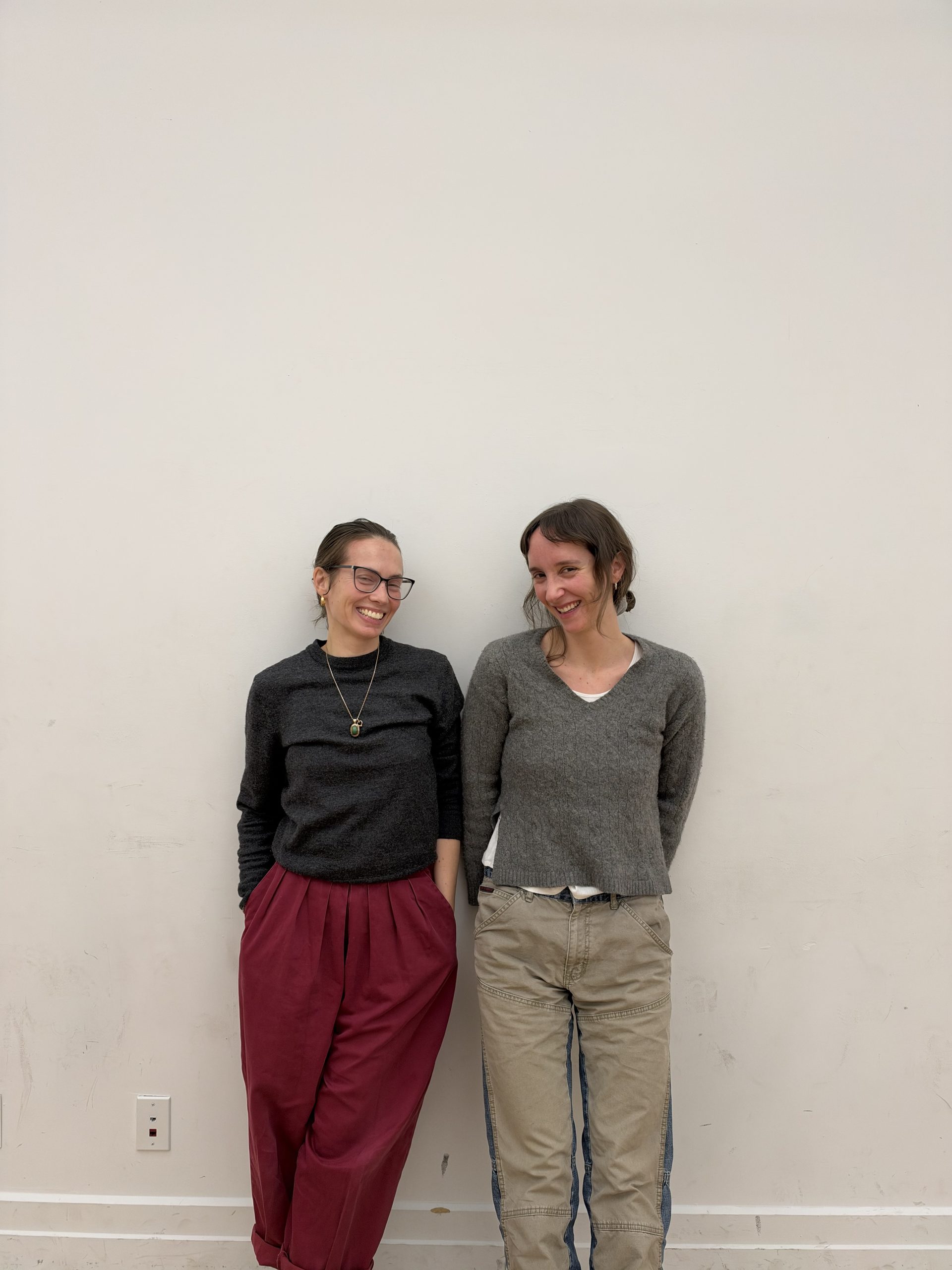
Leaning Into The Incongruous: Helen Gallagher’s Four Windows At Night directed by Liz Peterson

Helen Gallagher’s languid, mysterious, unsettling and intimate new play, Four Windows at Night, being performed next month at Light and Sound Design in a production directed by Liz Peterson, is definitely about things. Like female desire and how it gets twisted or abused–“what a short word for something so wide and confusing,” the character Anais reflects on the word “abuse” in the first scene. It’s about how desire can become impenetrable, even to the very owners of that desire; how part of getting older is experiencing intimacy with someone and then accepting that you’ll never have that same kind of communion with them again; how wanting something is its own trap, at the same time that it is something to be envied.
But Helen deliberately does not subscribe to aboutness. One recent cold, clear evening, at a dive bar on the Ridgewood/Bushwick border after seeing Layla Khoshnoudi’s excellent solo show I’m Not Even Half (Layla happens to be part of the luminous cast of Helen’s show), Helen and I were bemoaning the seeming necessity of having to write statements of purpose and project proposals for applications to things–fellowships, residencies, grants, etc. Helen commiserated with my lack of enthusiasm for this activity, affirming that it was antithetical to the act of writing to have to sum up what you’re writing “about”: “You write because you don’t know the answer to something! Because you don’t understand something!” she proclaimed! In her inspirational and sui-generis confidence, she resolved, from then on, to answer, “I don’t like that question” to applications and interested parties alike.
Indeed, there are no easy answers in Helen’s play. Characters pronounce disdain for things like video games and then find themselves slipping frictionlessly into the brain rot of a video game stupor. They have searing moments of insight, as when, at the end of the first scene, in which the women have a dinner party and watch the moon and speculate on Anais’s across-the-way neighbors, then kiss each others’ hands goodnight, practicing the well-trod choreography of women greeting and leaving each other, Olivia proclaims, “the four of us will never be together like this again.” But that insight doesn’t seem to extend to themselves: the dark shadow, that pulse, that lives and moves inside each of them, is elusive and murky. Characters narrate each other’s lives, and gaze upon each other in wonder and confusion, underlining their belief in and pursuit of uniqueness, and yet by the end, they are all together, looking at the same thing, longing, searching for something outside of themselves. As the four main characters of the play, Leah, Olivia, Anais, and Rhoda, all exactly thirty-one years old, approach the rest of their lives, they circle around the question that the Old Man poses to Leah after she (misguidedly and unsuccessfully) tries to seduce him: “What do you want your life to look like? In seventeen years from now, on a Tuesday afternoon, what will you be doing? With who?”
On a recent Monday afternoon, Helen, Liz Peterson and I sat down to a zoom (or two different zooms when my basic subscription kicked us off the first one) to talk about the inspiration for the play, fighting to keep those “incongruous moments” in a new play process, hiding in heterosexual relationships, making your characters go out and do things, and how hard, but righteous, it is to self-produce:
Zoë Geltman
Helen, can you talk to me about your inspiration for this play? I know in class [Helen and I recently graduated from the Playwriting MFA at Brooklyn College] you mentioned that it was inspired by Virginia Woolf’s The Waves.
Helen Gallagher
It was a converging of things. I was reading The Waves like I told you, which ended up really permeating my consciousness, as reading does. And then it was wintertime. It was very cold. I love winter. I love nighttime. And I think cold nighttime plus The Waves was really the bed of inspiration for the play. And then I had dinner with three friends who I actually didn’t know very well. And it was so fun. I had such a lovely time with them. We talked about everything—each of us brought in very specific baggage and were talking about it and about our lives. We were all very different, coming from different places, but somehow ended up being completely aligned in what we were thinking about and worrying about. I left that dinner and I stepped out into the cold night and I felt ecstatic. I felt so energized and I felt so seen and then I was alone. I wrote the play a month or two later. I had no idea that that experience would come out in my art, or that The Waves would. I metabolized those two things at the same time. All of those ideas are what started the play, and defined the characters. And then for the latter half of it, I guess I was like: Now they have to go do stuff.
The play itself is almost a replication of that writing process. In Act I, we see characters being created and held in the warm and beautiful and delicate womb of Anais’s studio apartment. The very first stage direction tells us that “The table is nicely set. The glasses are all different sizes, in an intentional and endearing way. The apartment is feminine and well kept. The light is soft. The sheets are linen. There are little treasures everywhere. Like abalone shells and miniature spoons. Classical piano is playing quietly in the background.” And then it is as though Anais sets each of the women off on these dark and scary journeys, and makes them do things: take action, confront those desires and insecurities and things they said they wanted or told other people were important to them.
ZG
Can you tell me the story of how you two came to collaborate?
Liz Peterson
Helen reached out to me after she saw the Winterworks presentation–I directed a play by sebastian alberdi–and then we met and had cappuccinos and an artichoke with a lot of cheese in it.
HG
And butter.
LP
And butter. It was so oily. We just chatted about our interests and I remember her talking about what she felt had resonated with her [about alberdi’s play] and it seemed to me that there was an aesthetic alignment that’s really about the nuances of things that are in between. And then I recommended that book Hermione [by H.D.].
HG
Yeah, it’s such a beautiful book. It’s so nice when someone recommends a book and then you start reading it and you’re like “Oh yeah, this is exactly what I like. Thank you for seeing me.” I just loved Liz’s work. I saw that play at Winterworks and I loved the play a lot and I could also feel the presence of the direction and the nuance of it and a lot of very moving and beautiful subtlety. So I said, “Liz, would you like to get a coffee?” and then we did and we also had an artichoke.
ZG
Liz, tell me what drew you to this play in particular and to Helen’s writing in general.
LP
There’s something happening in the play between these characters that is this really astute observation about intimacy and intimacy between friends, and it is something I was a little scared to direct, because there’s a part of me that feels like I don’t have insight into it. So this felt like a huge risk for me emotionally on some level. But I also loved the challenges that the play presents in terms of its structure and how the world shifts from the first part and then how it changes with the departure of these three people and where they go. I’m always very excited to work on a new play and I was also delighted to hear that Helen felt like, “This is it.” She wrote it really fast. It came out of her in a way that felt complete and it’s got this real sense of itself. I was excited to trust that and know that it wasn’t going to be a process where you were doing a lot of rewrites necessarily, that we could take this as being an entity on its own. That’s always my approach–even in a new playwriting process, it’s the things that come up in a rehearsal process where someone asks a question about something that feels a little incongruous within the world or it’s not fully explained. I’ve found that the playwright often takes that in and then says, “Oh yeah, that doesn’t make sense. I’ll change it.” But I always fight for those things to stay in because to me the moments that are the hardest for the writer to explain feel like there’s a clue there about this world that we haven’t cracked yet. We had one moment like that, Helen, a couple of weeks ago.
HG
Was it the blanket?
LP
Yeah, it was about a blanket and there was a little bit of discussion around, should we have to use this as a prop? Helen was ready to cut it after watching how we were working in rehearsal and then Susannah [Susannah Millonzi, who plays WOMAN] discovered something with it that actually became this really beautiful moment where we could create an image that hadn’t been previously seen and we were all really excited about it.
HG
That was really cool. To be shown why something was right when I had been doubting it and asking myself, “Why did I write that, that makes no sense.” But then everyone was talking about it in a really intelligent way and I was convinced.
ZG
I’m really responding to what you’re saying, Liz, about you fighting to keep those moments in that seem incongruous.
LP
I find that is true of all plays. Even a classical play that’s been done a million times. There are sometimes these really odd things that you wonder, How did that get in there? I feel like there’s something about an individual voice that has to have its own idiosyncrasies and so I find it sometimes in the odd moments or stage directions or a line that presents a problem in the room and so my practice is always to lean into it.
ZG
Liz, you can answer this or not: How old are you? I just ask because all of the main characters in the play are 31. I’m curious how the women’s very specific age of 31 relates to your own relationship to age and to Helen’s themes and to your approach to the play.
LP
I’m well beyond 31. I certainly related to the existential questions that they’re grappling with. This is precisely the kind of thing that you start to age into at that point: the concerns of fertility, that being so much at the root of those kinds of decisions for a biological woman. In the play it’s so much about their relationships to their partners and how they’re going to build a life together. But it is also an incredibly political thing to write about and center as one of the character’s concerns. It is something that changes your development when you’re weighing these things as a new adult. I heard that our brains don’t finish developing until you’re 24. Have you heard this?
ZG
I heard 25.
LP
It makes sense to me. I don’t think my brain had finished developing by 25.
ZG
Still not developed.
LP
So 31 feels like you’re understanding what it means to be an adult. You get a little distance and you’re able to see yourself. I think that is really elegantly made into one of the major themes of the play: how they’re seen by each other and that it’s this very beautiful thing and it’s also terrifying because they have to confront what they are and what’s being reflected back to them. It definitely feels like the fact that they are all 31 aligns with the cosmic nature of the play as well. You can imagine that if you were to look at all their astrological charts, there’s something about that specific generation or the place they are in inside that generation that also aligns them.
ZG
You’re well into rehearsals at this point. How are they going and are you learning anything about the play that you didn’t know before? It sounds like you have already, with that moment with the blanket.
LP
We just had a few days of one-on-one rehearsals with the four friends. And that felt really exciting. Helen, I don’t know how you felt about doing it because I always wonder what it’s like for the playwright to hear their play being reflected on in front of them, especially when it’s deviating from what you thought it was doing.
HG
I’ve loved it. We have such an incredible cast. Everybody’s so smart. Hearing them talk about the play has been such a joy. I feel really grateful and also it’s interesting to feel like your work is disembodied from you, and the way that disembodiment allows you to be shown new things about it. That’s the most exciting thing about this specific medium: that people could know your work better than you do.
ZG
Helen, are you not doing any cuts or rewrites at all?
HG
No. I really haven’t edited this play very much at all since I wrote it.
LP
Is that something you’ve done before, this kind of automatic writing?
HG
Yeah, I tend to feel that the headspace I’m in when I write a play is specifically of that time, so everything I write during that time is as true to the play as it could ever be. I have felt with my own work that revising doesn’t make it better. But also it might just be that I’m afraid of revision. I’m afraid of disrupting whatever that purity of energy was when I wrote the thing. And meddling with it at all and feeling it start to deaden or change–I write very impulsively and to try and re-access the impulse can be quite difficult. Because although it is impulsive, every word is placed very purposefully. So even changing one word around can sometimes make me want to vomit.
LP
When you were just talking about wanting to preserve the purity of the moment it reminded me of something we’ve said in rehearsal about what happens to these three characters when they leave the apartment. And some part of them is also in pursuit of trying to recapture the truth of the moment that they’d shared.
HG
Totally. I find that life moves in phases in a really strong way. This play already feels old and in some ways inaccessible to me.
ZG
This play is so feminine and so much about female desire and women not quite understanding or accepting or being able to access their desire or what’s inside of them. How are you approaching that in the design?
LP
In terms of the design, we’re still in the works. But Amanda Horowitz is our production designer. Amanda has a sculpture practice that includes making clay figures. I really resonated with the idea that there would be some kind of clay figures–molding something by hand and it being this act of becoming that feels to me like what they’re in pursuit of. And so that’s an idea that we’ve been talking about–how we might integrate that in terms of the staging. The venue, Light and Sound Design, also has this very particular quality. The ethos of that place is about creating space for people to come in and have a very truthful, somatic and embodied experience–like listening to music or dancing or eating food that’s been made there and doing it in a way that is not commercialized. There’s something very comforting about the way they’re creating that space. That was actually the biggest design gesture, is doing it in that venue. It’s a space that Helen also has a really tight relationship with.
And our lighting designer Christopher [Christopher Wong] is planning to work with the lights that they already have there. So it’s also about finding new ways to use these things that are already there, trying to create all these different kinds of disco balls. So that’s exciting.
ZG
I’m curious about your directing process, Liz, and how you translate the very specific tone of this play, which can be quite formal or distanced–as we’ve been talking about, these women don’t quite know what they want or are not saying what they want. And maybe that comes out in the objects or the sculpture that is part of the set design. But what’s your approach to directing this kind of text and directing actors with this kind of text?
LP
I mean tone is always the hardest thing to direct. I’ve had this conversation with many people that you actually can’t direct tone. An actor either has it or they don’t. I don’t know that I subscribe to that necessarily, but it certainly is a challenge if not everybody can hear the tone, and what that rhythm and nuance is. My approach to that is–and this is my approach to actually just directing generally–setting up a process in the very beginning that supports a lot of dialogue and a collective interrogation of what we’re doing. It’s about building a shared aesthetic language because you’re making a culture, right? You’re building a world when you work on a play. And so for everyone to understand the world that they’re in I feel very strongly that it’s not about me coming into the room and telling them what my vision is or speaking to them a lot in the first couple of days. It’s actually about getting to hear from everybody where they’re at. That can reveal all kinds of things. It reveals what people mean when they say humor, what people mean when they say that something is “flat.” Words can fail us–or have failed me in big ways in rehearsal processes. In the past, I’ve given a note and then it goes in a direction where I think, “Oh no, what did they think that word meant?” I worked for a long time as part of a company called Public Recordings and the mission of that company is to produce performances, concerts, publications that are asking how groups make decisions. It was also something that we explored within the company ourselves in how we ran it. That’s now so ingrained in the way that I approach projects because you need everyone to be pursuing the same shared goal. There’s always going to be individual ways of fine-tuning that with each person, but the culture and the community that emerges when you come together to make a show is incredibly powerful. And so I always try to use it as a way to tackle things like tone.
ZG
I remember someone once told me to deliver something more “purple.” I was like, “Yeahhhhh.” I had no idea what she was talking about, but I didn’t want to seem like an idiot.
LP
Do you think she was satisfied with what you did?
ZG
No.
I heard this clip of Kate Berlant talking to Amy Poehler on her podcast, and she said she thinks that heterosexual relationships can be ways for women to hide. I wonder if either of you relate to that at all. And do you relate to that in terms of this play?
HG
When I was younger, I found it really sad that some of the friendships and closeness that I had with women also felt like we were all sitting in a waiting room waiting to be taken away by a man, away from each other. A lot of the beautiful, strong intimacy that was forged during that time was almost treated as a substitute for romantic partnership, so that when people were eventually partnered, it was no longer needed. That is something that I really try to fight now. I have extremely close friends who I have a parallel level of intimacy with that I do with Wyatt [Wyatt Bertz, Helen’s partner who is also doing the music for the show]. And one does not usurp the other. So yeah, I guess it can feel really safe and also limiting to be in a heterosexual relationship if that is the prize or the end goal. I was definitely taught to aim towards that when I was young–which is crazy, because it feels so Victorian. I was always being asked if I had a boyfriend, when I was going to get one, why it wasn’t happening, and I was always asking myself the same questions and feeling bad about it. There was a time in my life where everything I did felt like it was in pursuit of being attractive.
In the play, the character of Leah is described as having “finally accepted that she didn’t care about anything else in the world as much as she cared about being beautiful. Everything else was a pretense for that one thing. Her interest in nutrition, obviously, but even her interest in philosophy.”
LP
It’s interesting to think about in relation to the play where two of them have partners, and the other two are single. It’s interesting that they are both staying in those relationships because it seems like they’re more afraid of not having them than being in them. Which I think is really real. I’ve seen it in people and I also went through it. I had a 16-year relationship that ended years ago. But it’s pretty existential to leave something that you’ve been in for a certain amount of time because your sense of yourself is being reflected by this partner.
ZG
I heard this idea and it resonated with my reading of the play because as you said, Leah and Anais are in these unsatisfying relationships where they’re not getting what they want and there’s even a question of emotional abuse, and then Olivia is single but that scene of her kind of drooping into playing video games with Young Man is such a great scene. It also creeps me out because she’s so disdainful at first of it and then just submits to it, and then they’re both there, staring at this stupid game [the game is called Space eater time stealer donkey kick gemstone chase reveal love]. So in a way you could say that she’s sort of hiding in that or she has been subsumed into this stance of just looking straight ahead, looking at this little device together with this person. Whereas Rhoda–it’s not like the sexual interaction she has is perfect but it feels like the most self-actualized moment of the play.
Moving on after my heterosexual hegemony monologue…
ZG
It’s so hard to make things and it’s so much money and organization and scheduling and getting a hundred people to say yes. What has it been like to self-produce and will you ever do it again do you think?
HG
I was just talking on the phone with my mom this morning on my way to teaching at Brooklyn College. I was like, “I don’t like this [self-producing, that is]. It’s so hard.” I think there’s a part of me that feels resentful of the way that it distracts me from writing. For me, logistics are a very comforting distraction from writing because it’s something easy that I can do and still feel like it’s productive. So self-producing has been kind of a big opportunity for procrastination. And anytime there’s something getting in the way of writing I end up just feeling quite grumpy. So I think I’ve been in a grumpy phase because my time is really limited right now. But also, I think it’s essential. This is something that is a rite of passage. I’m sure I’m going to look back on it with so much gratitude and I already do. I feel very grateful. Olivia Mermagen and Daniel Holzman are producing it with me, which is so helpful and also the fact that they’re friends of mine means that I get to text them every day and be like, “Is that weird? Should I not send that email?” And they’re being so comforting and supportive. I’m texting them so much. Producing someone’s play is doing so much emotional labor. So they’re heroes for that. But everybody is doing more than they would in the roles that they’re in. I feel so grateful and I also feel so guilty–which again is the hard thing about self-producing: feeling guilty about not being able to pay people what I want to pay them and just being appreciative that everyone’s willing to do it. I don’t know if I’ll do it again. Probably. Probably. I want to. I want to keep making work in this way. I think it’s so righteous.
ZG
It is righteous.
HG
It’s one of the only ways to do this thing, especially at this point in my career. But I also have so many resources that are so helpful. New Georges and The Hearth are being so helpful. I have Colt Coeur. And Clubbed Thumb has been so generous. There are so many support systems in place. So I’m just being a little bit of a baby. It’s good. My final answer is: it’s awesome.
ZG
I’m writing that down.
HG
Erase all of the whining and just say it’s awesome.
It will be a waxing crescent moon when you go to see the play. Hopefully it will be a cold, clear night. You will journey out into the dark stillness of Greenpoint afloat in the desperate, searching, delicate and absurd moments of Helen’s writing, Liz’s subtle and rigorous direction, the actors’ intense presence and attunement. Perhaps you will take the long way to the G train, keeping the moon in your eyeline. You will feel ecstatic and scared, alone and full, energized and also strangely unsatisfied. Maybe you will turn to look out at the cold black of the subway window at your own reflection and examine your profile, the curve of your forehead into your nose: Who is she? What does she want? What does her hair smell like? What’s inside of her?

Leave a Reply